Canton Fair in Guangzhou: Universal Tips for Visiting and Finding Suppliers

Updated: 16.02.2026
If you are planning to attend the Canton Fair in Guangzhou, it’s crucial not to go just to “look at booths,” but to find manufacturers, fresh product ideas in China, and secure clear purchasing and production terms.
This article provides universal tips that work for any upcoming session: how to choose the phase, prepare your goals list, and gather a pool of real manufacturers within 2-3 days.
The Canton Fair is an accelerator for decision-making: in a short time, you can compare 10-20 factories, filter out trading companies, discuss MOQ, prices, lead times, OEM/ODM capabilities, packaging, and documentation requirements. The key is to record numbers and agreements to quickly move on to samples and contracts after the fair.
But here’s the catch: without a plan, you’ll end up with business cards and fatigue. With a plan, you’ll bring back 2-5 strong candidates for further collaboration.
CANTON FAIR + TURNKEY FACTORIES
We will tailor the itinerary for your product, arrange factory meetings, filter out intermediaries, lock in prices/MOQ/lead times, and kick off the next project phase
In Brief, If You're Short on Time
The Canton Fair is not a “walk through the pavilions” but a tool for finding suppliers, interesting product ideas, and manufacturers in China.
Go with a purpose → choose the phase → prepare a list of factories and questions → record numbers and terms on site → after the fair, conduct supplier/factory verification, order samples, finalize the contract, perform quality control (QC), and only then proceed with payment and logistics from China.
Article Contents
What the Canton Fair Is and Why It’s Chosen for B2B Import

The Canton Fair takes place in Guangzhou at the China Import and Export Fair Complex (Pazhou Complex) and is usually divided into 3 phases to organize the vast assortment by categories.
For B2B, it is one of the fastest ways to:
- see products “in person” and compare quality, purchase samples;
- discover interesting product ideas and directions;
- gather contacts of manufacturers and trading companies;
- understand price ranges/MOQ/lead times; identify 5-10 real candidates for purchasing or OEM/ODM production.
If you don’t yet have basic inputs (target price, volume estimate, quality/packaging requirements), it’s better to gather these first. Then the trip becomes a tool, not an adventure.
How to Choose the Canton Fair Phase for Your Product Category
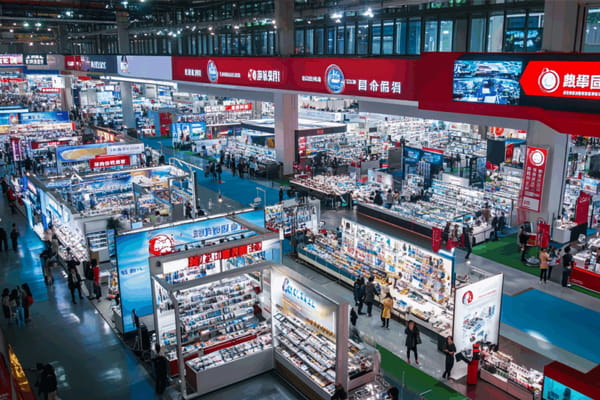
The key logic is simple: don’t try to cover everything. Choose 1 phase (maximum 2) where your product group is concentrated.
The Canton Fair publishes dates and categories by phases on official resources — use these as your “source of truth” before your trip.
Practical advice for selection:
- Formulate 10–15 key product keywords (in RU/EN).
- Check which phase your category is usually exhibited in.
- Prepare a “shortlist”: 15–30–60 booths you want to visit.
Official fair website with all information for each session: cantonfair.org.cn
Registration and Buyer Badge: How to Skip the Queues
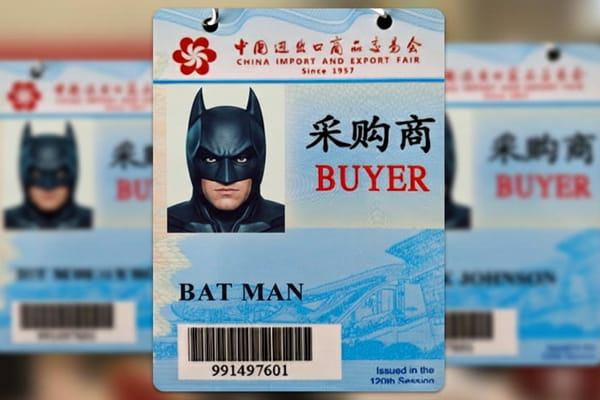
To access the venue, you need a Buyer Badge. The official buyer registration system is available online.
It’s almost always more advantageous to:
- register in advance,
- and collect your badge at alternative locations (e.g., airport, hotels, registration points) instead of waiting in long lines at the complex during peak times.
Mini checklist for registration:
- Passport + company information (at minimum business card/website/profile).
- Email/phone for your buyer system account.
- Plan your badge collection ahead of time — it saves 1–2 hours on the first day.
How to register online:
Logistics for Your Trip to Guangzhou: Where to Stay and How to Get to Pazhou Complex
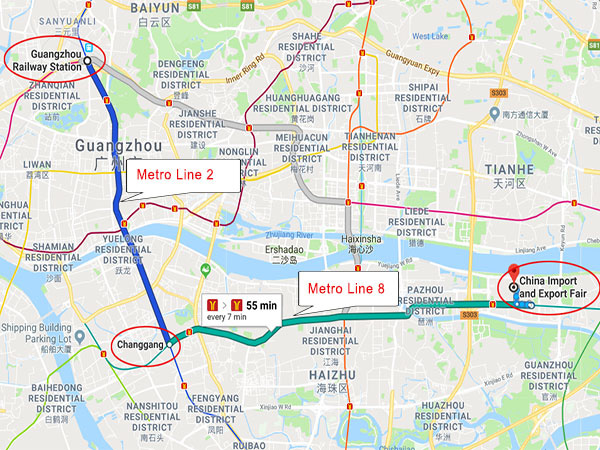
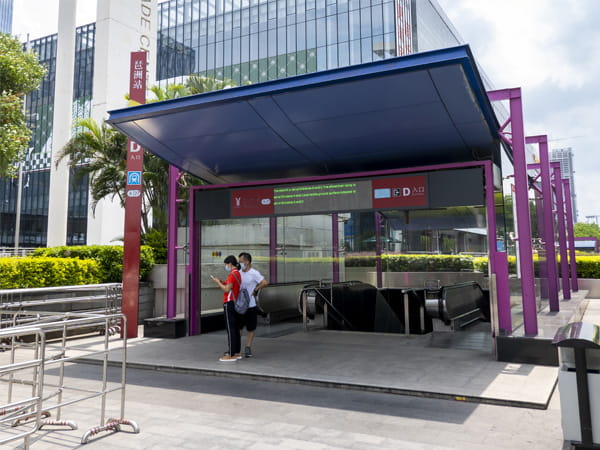
The Canton Fair takes place on Pazhou Island. The easiest way to get there is by metro: stations and exits are connected to different zones of the complex, so it’s best to choose a hotel with a clear metro route.
 |  |
What really saves time:
- Choose a hotel close to the metro line, not just “seemingly nearby on the map.”
- Arrive a bit later than the opening rush to avoid wasting the morning in crowds (especially on the first days).
What to Prepare BEFORE the Fair (14-Day Plan)
14–10 Days Before.
- Define your trip goals: bulk purchasing, factory search, OEM/ODM production, private label, new product line, sourcing product ideas to expand your assortment;
- Create a “product passport”: photos / references, materials, dimensions, packaging, target price, logo and branding application, packaging / instructions.
9–7 Days Before.
- Prepare a list of questions for suppliers (see below in the article).
- Supplier evaluation table template (to avoid drowning in business cards).
3–1 Day Before.
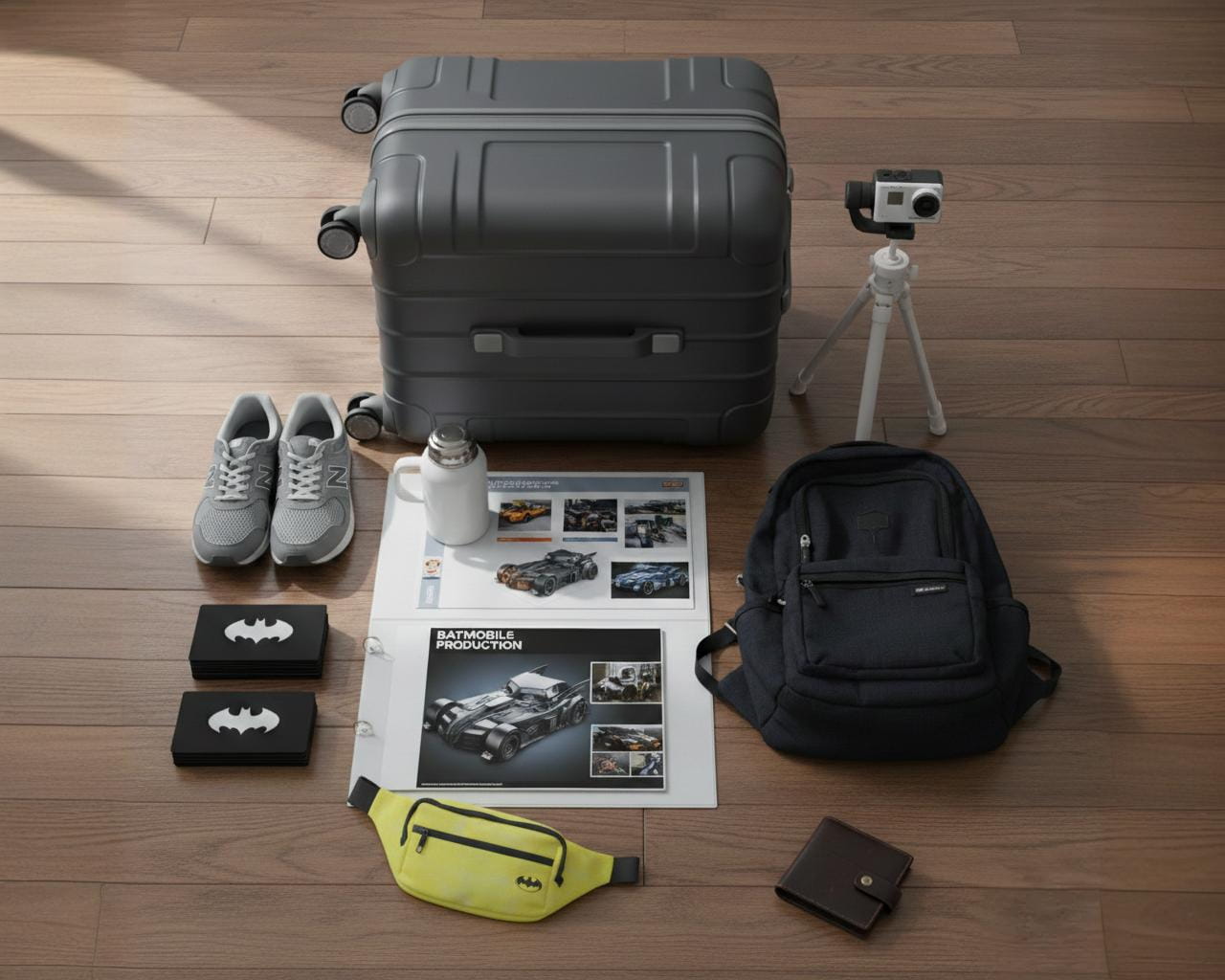
- Prepare business cards, QR/contact info, and a folder on your phone for photos / notes / saving contacts.
- Install essential apps: maps / translator / WeChat (often the main communication channel on site).
- Bring comfortable and lightweight shoes; you will walk a lot (much more than usual).
- Consider taking a small wheeled suitcase with a telescopic handle, useful for collecting catalogs and possibly several samples.
How to Record Agreements: Photos + Figures + Checkpoints
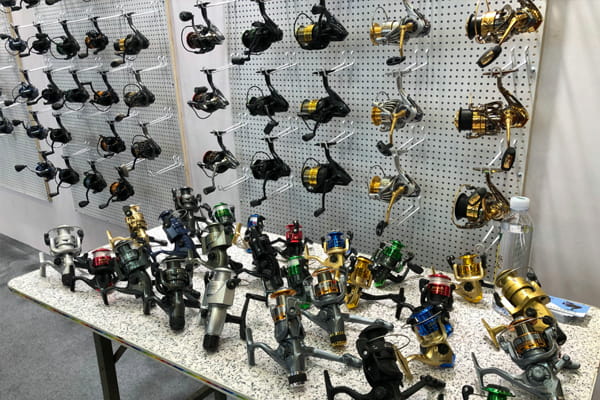
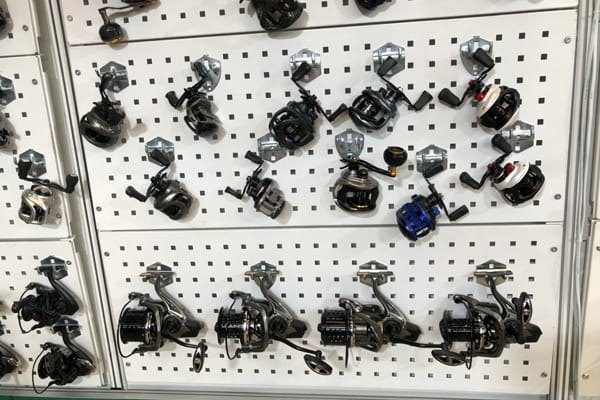
If You Record Data with Photos
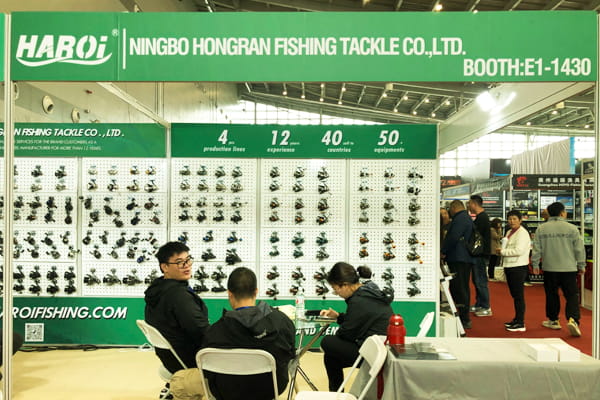
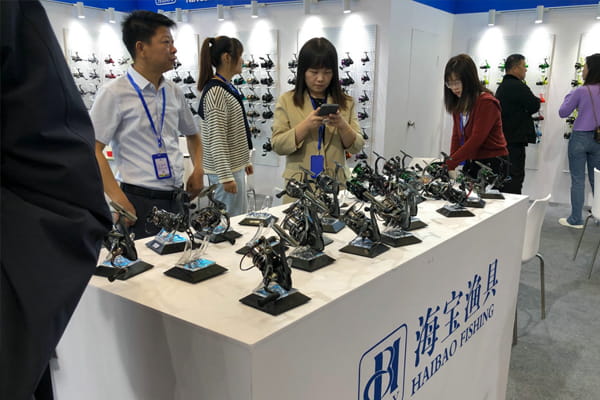
At the Canton Fair, you win not by “pleasant conversations,” but by accurately recording terms. This way, after the exhibition, you quickly move on to quotations, samples, contracts, and supplier verification instead of losing weeks on clarifications.
Rule “1 Booth = 1 Supplier Card”
Immediately on-site, create a note (or a row in a spreadsheet) and fill in at least:
- Company / Role: factory or trading company, contact name, WeChat/WhatsApp, email
- Product: product photo + photo of the booth sign/code/item number
- Figures: MOQ, price for 3 volume levels (e.g., 300/1000/3000), production lead time
- Terms: Incoterms (EXW/FOB etc.), packaging, labeling, certificates for your market
- Payment: deposit/balance, what is included in the price, what is extra
- Next Step: request price list, sample request, factory profile request, agreement on factory visit.
If You Record Data on Video
Video is a powerful and convenient tool when done structurally. Shoot short clips of 20–40 seconds so you can easily review and share them with your team later.
What to Film (Minimum Set)
- Overall booth view + company name (3-5 seconds to avoid confusion)
- Product close-up: key components/quality/material/hardware
- Packaging: box, inserts, labeling, completeness
- “Numbers on camera”: ask the manager to confirm MOQ / price / lead time / factory or trader
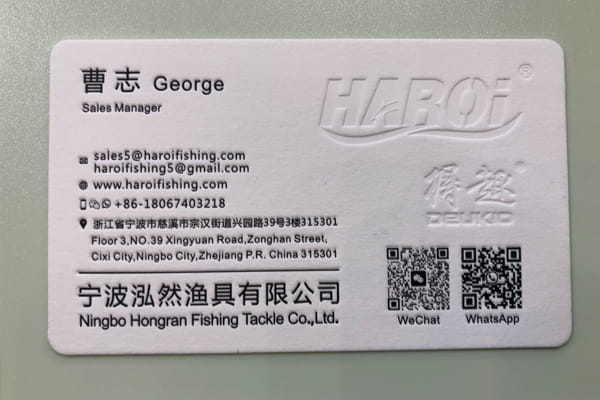
- Business card or contact booth, QR code with the manager’s WeChat account
Supplier and Factory Verification After the Fair: What to Do First

The Canton Fair is the entry point. After that, the “adult work” begins:
- Request company documents and basic information (legal entity, production location).
- Video call and quick “adequacy” audit: who responds, how, and what is confirmed.
- Order samples.
- On-site factory inspection.
- Pre-contract fixation: specifications, tolerances, packaging, labeling.
If you plan regular supplies or OEM/ODM production, factory audits and a QC system are almost always cheaper than the cost of a single batch error. (This is exactly how a “boring supply without surprises” is created).
Logistics from China and Customs Clearance: What to Plan in Advance

At the fair, you should already understand the basic delivery model — not just “how to transport,” but how to preserve the project’s unit economics:
- where we are shipping to (country / city / warehouse / marketplace / fulfillment center),
- in what volumes (box / pallet / consolidated cargo / container),
- delivery Incoterms (EXW / FOB / CIF, etc.) and who is responsible for what,
- who will be the importer/consignee and what data is needed for paperwork,
- which documents, certificates, and labeling are mandatory for your market,
- acceptable business lead times and what buffer to factor in,
- whether insurance is needed, and how to act in case of damage/loss/delay.
Otherwise, you will face the common problem: “I like the factory price,” but the overall project economics collapse due to delivery, packaging, labeling, downtime, and unexpected expenses.
Common Mistakes at the Canton Fair (and How to Avoid Them)
Going to the Canton Fair only — without a plan to visit relevant factories
How to avoid: prepare a list of 5-10 manufacturers in your category in advance, arrange meetings and 1-3 factory visits. At the fair, you collect candidates; at the factories, you confirm the reality of capacities, quality, and processes.
Going just to “look around” instead of solving a specific task
How to avoid: formulate your goal in one sentence: find 2-5 suppliers for X, with price Y, MOQ Z, lead time N. Everything else aside.
Trying to cover everything and everyone
How to avoid: choose 1 phase (maximum 2) and mark stands in advance. Better 30 quality meetings than 150 random ones.
Failing to distinguish a factory from a trading company
How to avoid: ask directly “Are you a manufacturer?” and request the production address, photos of workshops, list of equipment, staff, export markets; send an inspector to the factory for an audit.
Discussing price without conditions (MOQ/packaging/Incoterms)
How to avoid: fix the price only in connection with volume → packaging → Incoterms → lead times → payment. Otherwise, a “cheap price” becomes an expensive delivery.
Collecting business cards at the fair instead of taking the next step
How to avoid: after the conversation, there must be a next step: quotation/sample/video call/factory visit. Without a next step, the contact “dies.”
Agreeing on OEM/ODM terms verbally
How to avoid: document who makes the mold/tooling, who owns the tooling, sample deadlines, quality tolerances, what is included in the price, and who approves the pre-production sample.
Our Case Studies on Organizing Business Trips to China

Find more fascinating case studies on business support in China, visits to exhibitions, factories, wholesale markets, and other services on our YouTube channel
Besides case studies, you will find valuable information on building and scaling product businesses, up-to-date product selections, interviews with entrepreneurs, and much more useful content.
Conclusions from the Easy China Business Team and Author
The Canton Fair is a powerful tool when approached as a project for sourcing ideas and selecting suppliers—not just a “walk through the pavilions.” The winner is the one who knows in advance what they are looking for, what figures are needed (MOQ/price/lead times), and which terms must be fixed while still in China.
Key insight: the fair accelerates supplier selection and idea generation, while factories provide reality checks and low direct prices. Therefore, the most effective format is the combination of Canton Fair plus visits to specialized manufacturing facilities.
Looking for a business trip with real results? We organize your trip to China tailored to your product/project: preparing meetings before departure, accompanying you at the Canton Fair and factories, assisting in negotiations, and driving decisions — samples, contracts, quality control, and shipment.
💡 Useful services
You may also be interested in