How to Choose a Profitable and Popular Product for Your Business in 2026: AI, Trade Shows, and China – A Step-by-Step Guide

Updated: 11.01.2026
In 2026, “knowing how to sell” is no longer enough. Advertising, content, and packaging matter, but winners are those who choose the right product before purchasing or production.
Because the cost of mistakes has increased:
- money gets “frozen” in the batch,
- unsellable stock occupies warehouse space,
- competitors engage in price dumping,
- and quality issues surface too late to fix.
Good news: product selection can be transformed from intuition into a manageable process. Next is a practical guide: where to get ideas (AI, platforms, trade shows, China) and how to verify that an idea truly drives business by the numbers.
Terms in Simple Words

To Speak the Same Language:
- Fast-moving product - something that sells frequently and consistently (there is demand and repeatability).
- Profitable product - something that generates money after all expenses (product + logistics + duties/taxes + packaging + marketing + defects/returns + operations).
Sometimes it happens: a product is fast-moving but not profitable. Conversely: profitable but with “thin” demand. Your task is to find the balance for your business model (wholesale, marketplaces, B2B supplies, manufacturing, service, etc.).
Step-by-Step Product Selection Algorithm (9 Steps)
Step 1. Set a Filter Based on Your Business Model
Who you sell to (B2B/retail/marketplaces), average order value, repeat sales, documentation requirements.
Step 2. Find 20-30 Product Hypotheses
Using AI, marketplaces, crowdfunding, China, trade shows (see below for specifics).
Step 3. Verify Demand and the “Purchase Reason”
Look not only at demand volume but also why customers buy (pain point/task/use scenario).
Step 4. Assess Competition and Entry Barriers
Are there dominant brands? Is certification required? Is the category complex regarding returns?
Step 5. Draft the Unit Economics
Start rough but honest: include logistics, packaging, defects, returns, commissions.
Step 6. Pass the Product Through the Logistics Filter
Dimensions/weight/density, packaging type, damage risk, delivery seasonality, Incoterms.
Step 7. Check Legal Compliance and Documentation Requirements
Labeling, certificates, import restrictions, marketplace requirements.
Step 8. Order Samples and Fix the Reference (“Golden Sample”)
The reference is what you compare the entire batch against. Without it, quality control turns into a dispute.
Step 9. Plan QC for the Batch and Shipping Control
Control points (pre-production / in-process / final inspection) + packaging and loading requirements.
ONLY VERIFIED MANUFACTURERS
Don’t risk your turnover. We will find the factory, conduct an audit, quality control + photo/video report + shipment supervision
1. Idea Search Through Neural Networks: Analytics 4.0

Artificial intelligence today is not just a chatbot but a powerful tool for analyzing market gaps.
AI in 2026 is not “invent me a product.” It’s a way to quickly gather:
- customer pain points,
- competitors’ weaknesses,
- requirements for components and materials,
- ideas for differentiators for Private Label.
How to Use Global Models (ChatGPT / Claude / Perplexity)
What you do: ask AI to process reviews and highlight recurring issues.
What you get: ready items for the technical specification and quality checklists.
Sample prompts:
- “Gather 10 recurring customer complaints in the ______ category over the last 6–12 months. Divide into: quality, packaging, functionality, delivery, warranty.”
- “Compare the top 5 products in the ______ category: where competitors cut costs, and which differentiators are most often mentioned positively.”
- “Create a technical specification for a Private Label version of the ______ product: materials, tolerances, components, packaging, quality tests.”
How to Use Chinese Models (DeepSeek / Ernie / Kimi)
What you do: search for local trends and categories gaining momentum in China earlier than in your market.
What you get: ideas for products and form factors not yet saturated on international platforms.
Important: AI delivers strong results only with specifics. The more precise the input data (niche, price, audience, restrictions), the fewer “fantasies”.
2. Crowdfunding: Buying Ideas of the Future

If you want to bring a product that competitors don’t have yet, go where innovations are born.
Crowdfunding is useful if you want to see:
- new features,
- unusual form factors,
- “product stories” already ready for marketing.
Where to look:
- Kickstarter / Indiegogo: Global leaders. Look for projects that raised 5–10 times their target amount.
- Xiaomi Youpin (Mijia): The main showcase of Chinese innovations. Almost every hit here becomes a global bestseller within six months.
- Makuake / Campfire (Japan), JD Finance (China), Ulule (Europe): Platforms for finding niche and tech solutions
Tip from the Easy China team: look not only at the amount raised but also at the number of backers and comments, read the “risks/production/timelines” sections, verify if it’s a realistically producible product or just a nice visualization, think about the “market version”: what to simplify, what to enhance, what to remove.
3. Chinese Marketplaces: An Insider’s View
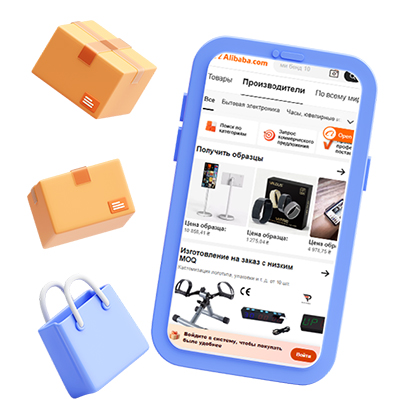
China is a leading indicator of global trade trends.
China often shows trends earlier. If a product becomes mass-market in China, it usually appears later on international platforms, just under different brands.
Where to look and what exactly to search for:
- 1688.com (B2B): Look for supplier growth in narrow subcategories, new product variations, packaging and component updates.
- Alibaba.com (B2B): Showcase for global wholesale. Analyze the “Top-Ranking Products” section to understand what professional buyers worldwide are purchasing.
- Taobao / Tmall (B2C): Check out “viral” products, customer reviews, and photos — there’s a lot of truth there.
- Pinduoduo (B2B/B2C): Perfect for finding mass-demand products at ultra-low prices.
Mini checklist:
- Are there stable sales from several sellers (not just “one hit wonder”)?
- What do buyers most often praise or complain about?
- Which configurations “pull up” the average order value?
- What do they say about packaging and damages?
Tip from the Easy China team: 1688 is a good trend radar, but verify: you need suppliers with stable orders, not just “pretty product cards.” Read photo reviews: packaging, defects, and “what actually arrived” show up there fastest. Don’t start with a batch. First - samples + requirement fixation, then scale up.
4. International Marketplaces: Global Demand
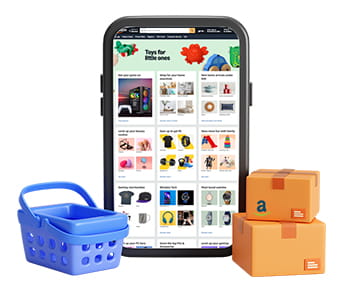
Analyzing top sellers across continents reveals products that have proven profitability but are not yet present in your market.
If the goal is not to “invent” but to quickly enter a familiar category, international marketplaces provide a good snapshot of demand and competition.
Where to look and what exactly to search for:
- Amazon: Use Best Sellers and “Movers & Shakers” lists to find products with sudden demand spikes.
- ETSY: Perfect for finding unique designer ideas that can be adapted for mass production in China.
- Shopee / Lazada: Leading platforms in Southeast Asia. Trends for budget electronics and accessories often start here.
- Mercado Libre: Allows assessment of demand in Latin American markets, often correlating with emerging markets in the EU and Asia.
- Rakuten: Japan’s market leader. Helps find products focused on exceptional quality and ergonomics.
- Allegro: The largest marketplace in Eastern Europe. A great demand indicator for neighboring regions.
- Temu: A rapidly growing platform. Analyze their “Lightning Deals” to understand which product categories are currently peaking in popularity in the US and EU.
How to Benefit:
Don’t copy the product “as is.” Capture:
- which features are mandatory,
- where customers are dissatisfied,
- which packaging and components are perceived as “standard.”
Tip from the Easy China team: Don’t copy the product 1:1. Capture the “category standard”: must-have features, components, packaging.
The most valuable insights come from 1-3 star reviews: they reveal improvement points for Private Label. Immediately check “stop-factors”: certification/labeling/restrictions, otherwise the profit on paper won’t match reality.
The most valuable insights come from 1-3 star reviews: they reveal improvement points for Private Label. Immediately check “stop-factors”: certification/labeling/restrictions, otherwise the profit on paper won’t match reality.
5. Offline Trade Shows: Where Major Contracts Are Born
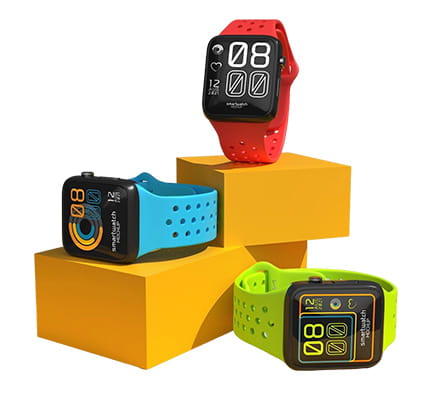
Trade shows allow you to see prototypes that will only appear in online catalogs 3–4 months later.
Trade shows are strong where you need:
- OEM/ODM,
- custom packaging,
- customization,
- large batches and stable supplies,
- personal contact with factory management.
Trade shows to consider (approximate guide):
- Canton Fair (Guangzhou): The most famous in China, three phases covering everything from electronics to home goods.
- CITE Expo (Shenzhen): Innovative electronics and components
- Global Sources Consumer Electronics (Hong Kong): Export-oriented gadgets and devices.
- HKTDC Hong Kong Electronics Fair: Huge platform for OEM/ODM orders.
- CIFF (Shanghai/Guangzhou): Furniture and decor (home and office, furniture, interior design, hardware).
- Bauma China (Shanghai): Special machinery and equipment (construction machinery, building materials, equipment).
- Automechanika Shanghai: Auto parts and accessories (spare parts, repair, electronics and systems, accessories and tuning).
- SIAL China (Shanghai): Food and packaging (food, soft drinks, alcoholic beverages, hospitality industry products and services, advanced technologies and specialized equipment for food and packaging production).
How to attend “correctly”:
- Plan your business trip in advance, don’t limit yourself to just trade shows; add selected factories to your checklist.
- Go not just to “look,” but with a precise list of requirements (technical specification).
- Collect 10–20 contacts but choose 3–5 based on filters.
- Immediately clarify: MOQ, lead times, materials, packaging, quality tests.
- After the show – compare quotes + order samples.
Tip from the Easy China team: Going without a technical specification means collecting business cards. Going with a technical specification means collecting quotes, terms, and agreements. On site, record 4 things: MOQ, lead times, packaging, quality control (otherwise, comparison is impossible). Strong results come not from the “visit” but from follow-up: emails, samples, personal acquaintance, comparing offers within the first 7-10 days.
Not sure which exhibitions to attend specifically for your niche and product category?
We will help you select relevant exhibitions in China where it’s easier to connect with manufacturers and OEM/ODM partners, rather than wasting time on “everything at once.”
We will help you select relevant exhibitions in China where it’s easier to connect with manufacturers and OEM/ODM partners, rather than wasting time on “everything at once.”
AI Assistant for Selecting Exhibitions in China
Our Virtual Exhibition Assistant for China will pick a relevant exhibition for your business and provide visiting tips.
The Virtual Exhibition Assistant for China quickly compiles a short list of the “right” events when you provide coordinates such as niche, product category, OEM/ODM or purchasing, target markets, desired dates/locations.
If you write something like “I want an exhibition with everything all at once,” you will get a colorful showcase of events but no guarantee that your manufacturers or negotiations will be there. The more precise your input, the closer you get to the booths where contracts are signed.
If you write something like “I want an exhibition with everything all at once,” you will get a colorful showcase of events but no guarantee that your manufacturers or negotiations will be there. The more precise your input, the closer you get to the booths where contracts are signed.
6. Private Label (PL): Transition from Reselling to Branding
Simple reselling in 2026 leads to price wars and fails to deliver long-term results.
Simple reselling often hits a wall of price competition. Private Label helps protect your margin if you create distinctions that matter to the buyer and secure quality.
Key points to understand:
- OEM – manufacturing products under your brand based on an existing design.
- ODM – when the factory (or you) participates in developing or modifying the design and components.
Where margins are most often “lost”
- lack of a reference standard – the golden sample (each batch “as it goes”),
- weak packaging (damages → returns),
- unfixed tolerances for materials/color/assembly,
- cutting corners on quality control.
If desired, AI tools can be integrated as a “first step”: gather ideas for differentiators, product and packaging requirements — then translate these into specifications, samples, and control points.
Advice from the Easy China team: Private Label works best when you have 1-2 clear differentiators important to the buyer (not “everything improved”).
Fix the reference (golden sample) and tolerances – then quality can be controlled, not just “debated.” Don’t skimp on packaging and QC: margins most often leak through damages, returns, and mis-sorting.
Fix the reference (golden sample) and tolerances – then quality can be controlled, not just “debated.” Don’t skimp on packaging and QC: margins most often leak through damages, returns, and mis-sorting.
The path to high profitability runs through Private Label. Use data from trade shows and neural networks to add a unique feature to your product and launch it under your own brand.
Need unique ideas for your brand?
Our AI Service – Private Label Idea Generator analyzes current trends and suggests promising product concepts for Private Label.
The accuracy of results directly reflects your query. The neural network excels at auditing and identifying growth points for existing products when given specifics. However, attempts to request the development of a “flying sofa for mother-in-law” will only produce amusing AI hallucinations that brighten your mood but don’t improve conversion.
Unit Economics: Clear and Honest (No Surprises)
Unit economics of the project is the profit from one unit of product after all expenses.
Mini-formula:
Selling price − (product + shipping + duties/taxes + packaging + marketing + defects/returns + operations)
What is most often “forgotten” to include:
- packaging adapted to actual logistics,
- cargo insurance during transit,
- losses from defects and mis-sorting,
- costs of returns/warranties,
- expenses for documentation/labeling,
- platform/payment commissions.
Want to verify the product by the numbers before purchase or production?
The Easy China Business team will select factories for your niche and calculate the project’s unit economics turnkey — including all costs usually “forgotten” in calculations.
What’s included in the calculation:
- product cost based on factory quotes (OEM/ODM)
- packaging and shipment requirements
- logistics (route, Incoterms, volume/weight)
- duties/taxes/customs fees (according to your route)
- reserve for defects, returns, and warranty cases

Conclusions from the Author and the Easy China Business Team
In conclusion, I want to emphasize: in 2026, success in product business is not a matter of luck but a result of working with data and technology.
Over the years of Easy China Business’s operation since 2011, we have witnessed how the rules of the game have changed, and today victory belongs to those ready to go beyond simple reselling.
Choosing a product now requires not only trend monitoring but also a deep understanding of B2B processes—from quality inspections at factories to strategically using neural networks to find untapped market niches.
Your next step must be as calculated as possible. Instead of guessing whether an offer will “hit,” always rely on honest unit economics before starting purchases or production.
Remember, behind every successful brand stands a reliable partner in China, ready to ensure project control at every stage—from finding a manufacturer to shipping the finished batch to your warehouse.
At Easy China Business, we are always by your side to turn your ambitious ideas into a consistently working and profitable mechanism.
💡 Useful services
You may also be interested in