
Polyurethane-cement Flooring Systems from China: How We Audited Nippon Paint Factories and Laboratories for a B2B Client

Updated: 25.05.2026
Summary: As part of business support for a client in China, we visited manufacturers of industrial flooring systems, studied polyurethane-cement systems, epoxy floors, polyurethane topcoats, laboratory samples, and real-world application cases.
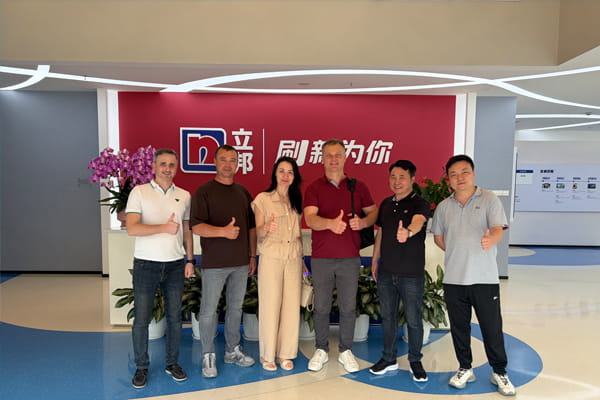
The main manufacturer we worked with in this area is 立邦 Nippon Paint China, one of the largest producers of coatings and industrial finishes in China.
Industrial flooring is not a category to select solely by catalog, price per kilogram, or supplier’s attractive presentation. Especially when it concerns polyurethane-cement systems for food production, warehouses, pharmaceuticals, commercial kitchens, production workshops, cold storage, or facilities with heavy mechanical loads.
In this article, we present our field case: how we assessed flooring manufacturers in China, why Nippon Paint China was the focus, which types of industrial floors and coatings B2B clients should consider, and what must be checked before purchasing materials, launching a project, or choosing a Chinese factory.
LET'S EVALUATE YOUR PROJECT
Check the project before buying. We assess the supplier, technical brief, shelf life and China sourcing risks — and tell you whether the project is ready to move forward.
Why Industrial Coatings from China Should Not Be Chosen Like Ordinary Goods
If a company purchases, for example, a finished product for resale, the main risks often lie in price, packaging, batch, deadlines, and quality stability. But industrial flooring coatings work differently.
A polyurethane-cement flooring system is not just a bag of mix or a can of paint. It is a complex of chemistry, substrate, floor preparation technology, application thickness, concrete moisture, operating temperature, chemical loads, cleaning regime, contractor’s qualifications, and execution control.
Therefore, a mistake at the material selection stage may not appear immediately but after several months of use: blistering, delamination, cracks, color fading, slippery surface, damage near drains, problems after hot washing, reactions to oils, alkalis, acids, or disinfectants.
For a B2B client, this is no longer just a “bad purchase.” It means production line stoppage, repairs, claims against the contractor, re-purchasing materials, and direct operational losses.
The main task in such a project
Is not to “find cheap polyurethane-cement flooring in China,” but to find a system, manufacturer, and technical solution that fit the specific facility.
That is why within the framework of business support we look not only at price and samples but at the entire scope:
- who the manufacturer is and what they actually produce;
- whether they have their own laboratory and R&D;
- which systems are offered: polyurethane-cement, epoxy, polyurethane, antistatic, self-leveling;
- whether there are real application sites in food industry, warehouses, production, logistics, parking;
- what technical datasheets, SDS/MSDS, certificates, and standards the manufacturer can provide;
- how the material behaves under loads, moisture, chemicals, temperature, and mechanical abrasion;
- who is responsible for the application system and the technological map.
Why We Studied Nippon Paint China / 立邦 Separately in This Case
Nippon Paint China, or 立邦, is one of the most renowned brands1 in the Chinese coatings industry. The company operates not only in decorative paints but also in industrial coatings, construction materials, automotive, marine, architectural, and engineering solutions.
For our client, the brand name itself was not the key factor, but a combination of several aspects:
- a large manufacturing and R&D infrastructure in China;
- availability of industrial and construction coatings;
- experience with engineering projects where not only color and appearance matter but also operational performance;
- presence of system solutions for flooring, not just individual products;
- the ability to study catalogs, technical materials, laboratory samples, and real application cases.
In its public communications, Nippon Paint China states it works with architectural, industrial, automotive, marine coatings, and related construction materials. This is important for B2B tasks: a major coatings manufacturer in China typically offers not just a single product but a system — primer, leveling layer, main coat, finish, application technology, and substrate requirements.
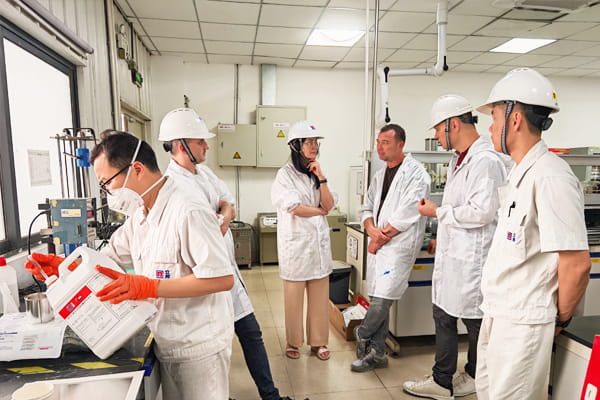
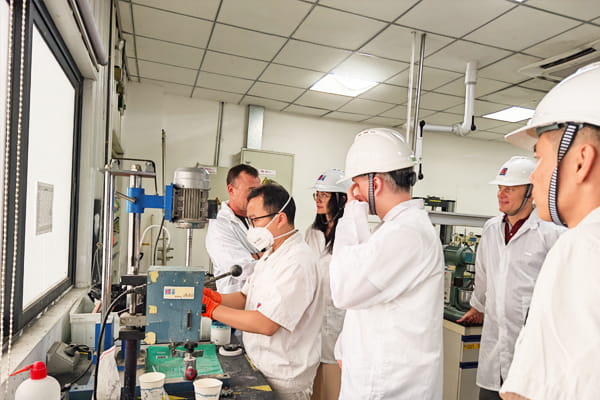
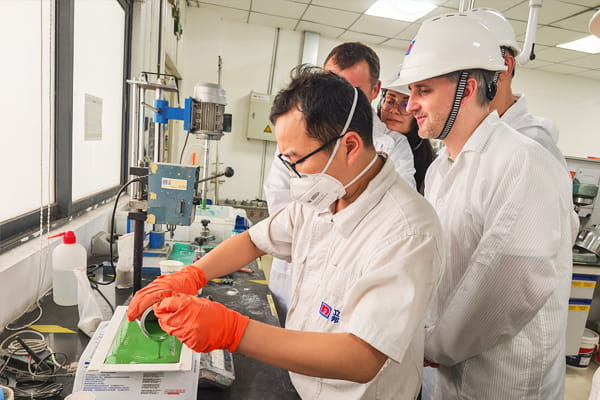
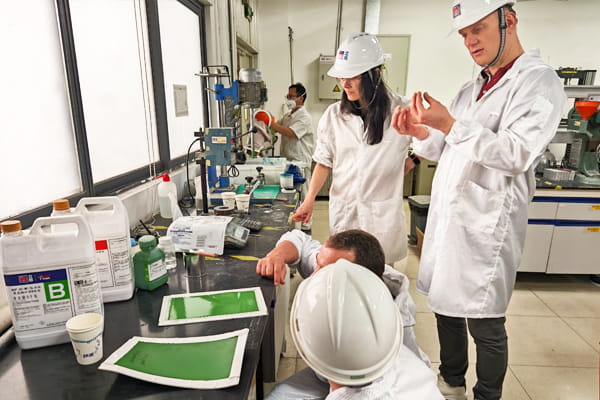
Manufacturer’s laboratory area: here they test samples, compositions, coating durability, and suitability of systems for industrial facilities.
Types of Flooring and Coatings We Considered
Below is not a promotional catalog but a practical category map you need to understand when searching for industrial flooring manufacturers in China.
Comparison of Main Types of Industrial Floor Coatings
| Coating Type | Application Areas | Strengths | Limitations and Risks | What to Check with the Manufacturer |
|---|---|---|---|---|
| Polyurethane-Cement Flooring Systems | Food production, meat and dairy processing, commercial kitchens, freezer rooms, wet zones, workshops with hot washing | High resistance to moisture, washing, chemicals, thermal shock, and mechanical loads | More expensive than simple epoxy systems; critical shelf life, correct component mixing, and substrate preparation required | TDS/SDS, shelf life of each component, temperature regime, chemical resistance, system thickness, concrete requirements, production date / expiry date / batch number |
| Water-Based Polyurethane Self-Leveling Compounds | Commercial, warehouse, technical, and industrial premises where flat surface, low odor, and VOC control are important | Low odor, flat surface, easy cleaning, more eco-friendly application system | Does not always replace PU-cement in hot washing, thermal shock, and aggressive chemical zones | VOC, adhesion, abrasion resistance, substrate compatibility, curing conditions, concrete moisture requirements |
| Epoxy Self-Leveling Floors | Warehouses, parking lots, production areas, laboratories, technical zones, showrooms | Flat surface, wear resistance, wide color range, clear application technology | Not always suitable for hot washing, thermal shock, constant moisture, and food zones with aggressive sanitation | Adhesion, abrasion resistance, primer compatibility, substrate moisture, VOC, layer thickness, curing conditions |
| Epoxy Primers, Primers and Repair Compounds | Concrete preparation before applying the main flooring system | Improve adhesion, strengthen substrate, reduce delamination risk, help repair concrete defects | Mistakes with primer can ruin even a good finish system | Substrate type, concrete moisture, layer compatibility, interlayer drying time, consumption, application instructions |
| Moisture-Protective and Vapor-Permeable Layers | Young concrete, damp substrates, zones with moisture rise risk | Reduce blistering and delamination risk, help work with complex substrates | Not always needed; wrong layer choice may not solve moisture issues | Allowed substrate moisture, vapor permeability, compatibility with main system, application restrictions |
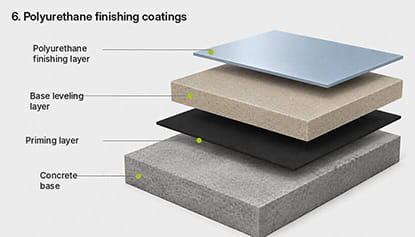
| Polyurethane Finish Coatings | Top protective layer for industrial and commercial floors, zones with abrasive loads, decorative industrial objects | Scratch, wear, and color fade protection; improves appearance and system lifespan | Finish alone does not solve weak substrate or incorrectly chosen main system issues | Layer compatibility, hardness, abrasion resistance, UV resistance, reparability, full curing time |
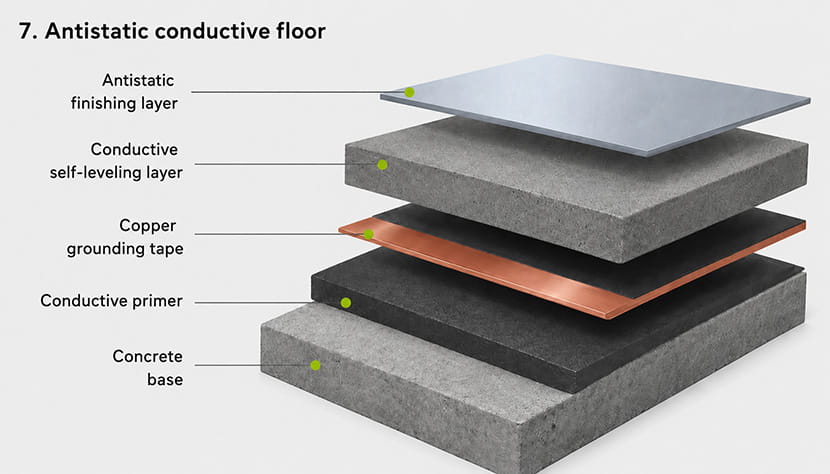
| Antistatic and Conductive Floors | Electronics, pharmaceuticals, laboratories, clean rooms, sensitive equipment warehouses | Static electricity control, compliance with special technical requirements | Grounding or resistance system errors make coating useless for ESD tasks | Electrical resistance, test standards, grounding scheme, real application sites, control protocol |
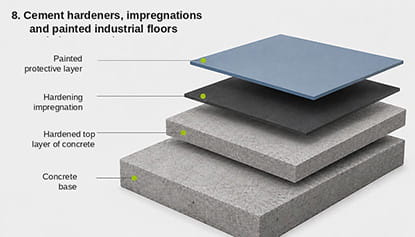
| Cement Hardeners, Impregnations, and Industrial Concrete Paints | Warehouses, utility rooms, budget production zones, objects without aggressive chemicals and hot washing | Lower cost, ease of application, fast project start | Do not replace full polyurethane-cement or epoxy systems under high loads | Floor load, concrete dusting, service life, chemical resistance, consumption, substrate preparation guidelines |
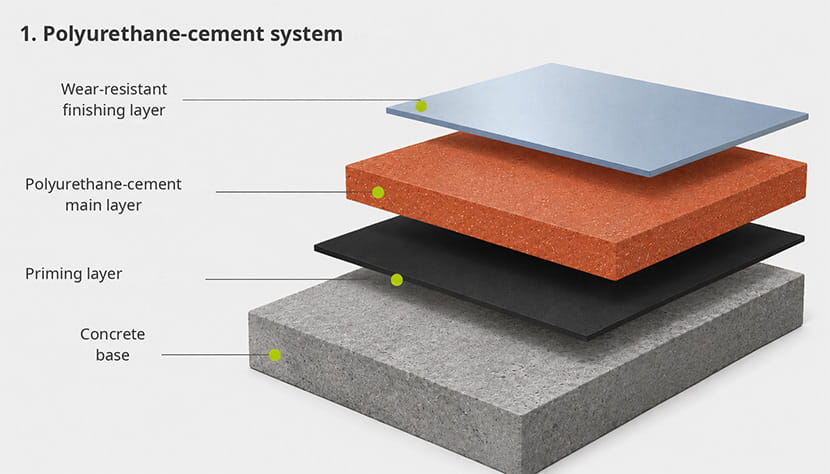
Polyurethane-Cement Flooring Systems
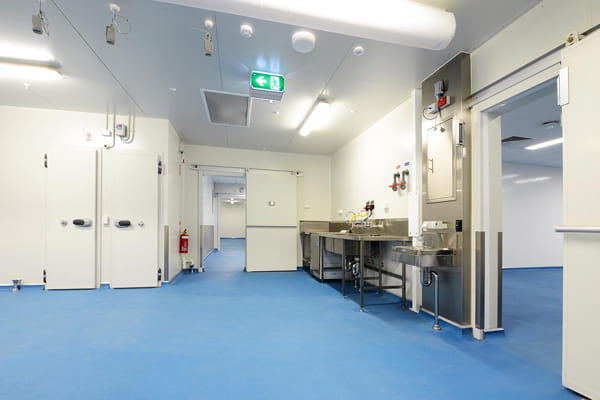
Polyurethane-cement floors are one of the most compelling segments for B2B clients seeking durable, sanitary, and chemically resistant coatings. These systems are often considered for food production, dairy plants, meat processing, beverage manufacturing, commercial kitchens, cold and freezer rooms, pharmaceutical facilities, warehouses, and production areas with intensive cleaning.
Key advantages:
- high mechanical strength;
- resistance to hot water, steam and regular washing;
- chemical resistance to selected acids, alkalis, oils, fats and cleaning agents;
- suitability for facilities with high hygiene requirements;
- seamless surface;
- reduced risk of concrete dusting and substrate degradation;
- adjustable system thickness depending on the load.
What to check: system thickness, substrate requirements, temperature regime, shelf life of each component, curing time, slip resistance, thermal shock resistance, and cleaning protocol.
Water-Based Polyurethane Self-Leveling Compounds
Water-based polyurethane self-leveling compounds are used where a flat surface, low odor, VOC control, easy cleaning, and a more environmentally friendly application system compared to many other solvent-based coatings are important. This solution can be relevant for commercial, warehouse, technical, and industrial premises if the operating conditions comply with the manufacturer's technical specifications.
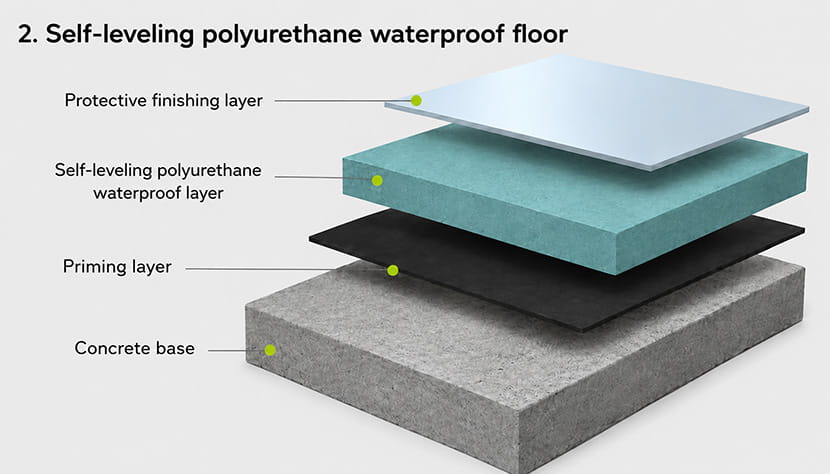
Key advantages:
- lower odour compared with many solvent-based systems;
- suitable for facilities where hygiene and VOC control matter;
- smooth self-levelling surface;
- good abrasion resistance when the layer is correctly specified;
- easy cleaning and visual control of cleanliness;
- possibility to select a topcoat for required wear resistance and appearance;
- more comfortable application where strong odours and aggressive solvents are undesirable.
What to check: VOC, adhesion, abrasion resistance, substrate moisture requirements, curing conditions, compatibility with primer and topcoat, allowable chemical and temperature loads.
Epoxy Self-Leveling Floors
Epoxy self-leveling floors are a common solution in China. They are frequently used in warehouses, production areas, parking lots, exhibition halls, commercial facilities, laboratories, and technical zones.
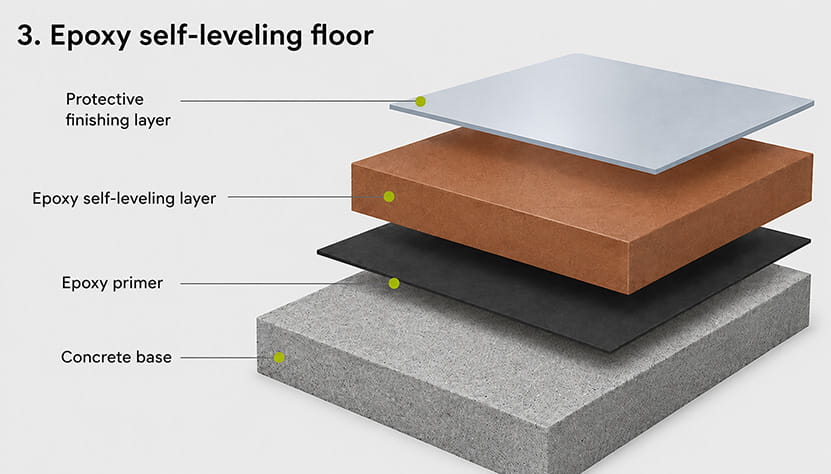
Key advantages:
- smooth decorative surface;
- good wear resistance for many warehouse and production tasks;
- well-understood application technology;
- wide range of colours and floor marking options;
- compatibility with primers, quartz sand and intermediate layers;
- easier cleaning compared with open concrete;
- dust-free surface for warehouses, parking areas or technical zones;
- often more affordable than PU cement systems.
What to check: substrate moisture, adhesion, abrasion resistance, chemical resistance, layer thickness, full curing time, compatibility with primer, and restrictions regarding hot washing.
Epoxy Primers, Primers, and Repair Compounds
In industrial flooring, the primer is often more important than the purchaser might think. A mistake with the primer or substrate preparation can ruin even a high-quality finish coating.
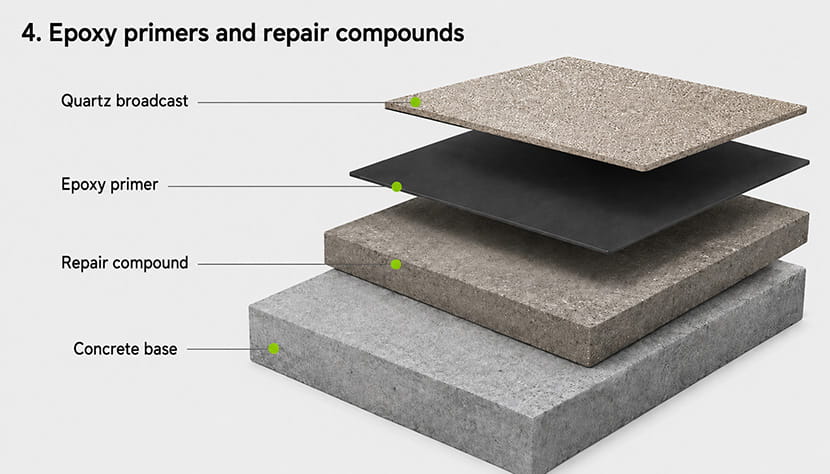
Key advantages:
- improved adhesion between concrete and the main flooring system;
- strengthening of weak or porous concrete substrate;
- lower risk of topcoat delamination;
- local repair of cracks, cavities and substrate defects;
- substrate preparation for epoxy, polyurethane and PU cement systems;
- more stable consumption of the main material by reducing concrete absorbency differences;
- ability to use quartz sand to create an intermediate bonding layer.
What to check: which substrates the primer is suitable for, allowable concrete moisture, interlayer drying time, consumption, compatibility with the main system, and applicability with quartz sand.
Moisture-Protective and Vapor-Permeable Layers for Concrete Substrates
This is a critical topic for China and many export markets. On sites with high concrete moisture, a standard organic system may start blistering, delaminating, or losing adhesion. Therefore, it is essential to understand in advance whether the manufacturer offers solutions not only for perfectly dry concrete but also for challenging substrates.
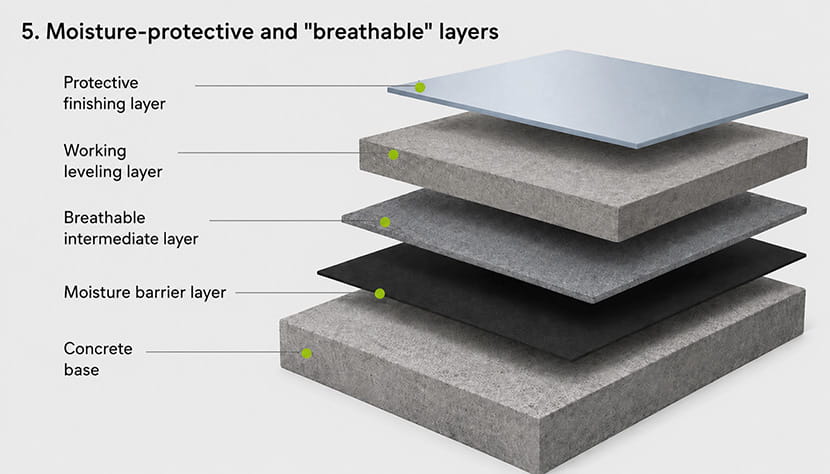
Key advantages:
- reduced risk of blistering and delamination caused by residual concrete moisture;
- possibility to work with difficult substrates where concrete has not fully dried;
- protection of the main flooring system from rising moisture;
- improved stability in wet areas;
- potential application on young concrete when the manufacturer’s technology confirms it;
- lower risk of rework after facility launch;
- safer substrate preparation before applying expensive PU cement or epoxy layers.
What to check: allowable substrate moisture, vapor permeability, compatibility with the main system, temperature and application timing restrictions, as well as real-world case studies on challenging substrates.
Polyurethane Finish Coatings
Polyurethane finish coatings are applied as a protective layer to enhance wear resistance, scratch resistance, and improve the decorative appearance of surfaces. In industrial facilities, the finish must withstand not only foot traffic but also carts, forklifts, frequent cleaning, localized impacts, sand, and abrasives.
Key advantages:
- extra protection of the main system from scratches, wear and abrasion;
- longer service life of the industrial floor;
- improved surface appearance;
- choice of matt, semi-matt or more decorative effects;
- improved colour and visual stability;
- easier cleaning and maintenance;
- possibility of local topcoat renewal without replacing the full flooring system.
What to check: compatibility with underlying layers, hardness, abrasion resistance, UV resistance, color retention, reparability, and full curing time.
Antistatic and Conductive Self-Leveling Floors
Such systems are not required for everyone. However, for electronics, laboratories, pharmaceuticals, precision manufacturing, warehouses with sensitive equipment, and certain clean rooms, antistatic flooring can be a mandatory requirement.
Key advantages:
- reduced risk of static electricity build-up;
- protection of sensitive equipment, electronics and components;
- use in ESD zones, laboratories, pharma and clean rooms;
- control of electrical resistance of the floor;
- dust-free and easy-to-clean surface;
- compatibility with industrial floor marking and zoning;
- improved process safety where static charge is a critical factor.
What to check: electrical resistance, grounding system, control regulations, testing standards, measurement protocols, and real-world application sites.
Cement Hardeners, Impregnations, and Painted Industrial Floors
Not every facility requires an expensive polyurethane-cement floor. Sometimes a business can suffice with a hardener, impregnation, painted cement floor, or industrial concrete paint. However, such a decision should not be made solely on the basis of "cheaper," but taking into account the load, service life, and potential repair costs.
Key advantages:
- lower cost compared with complex multi-layer systems;
- reduced concrete dusting;
- strengthening of the concrete surface layer;
- faster facility start-up under moderate floor requirements;
- simple maintenance and possibility of local renewal;
- use in warehouses, utility areas and production rooms with low chemical load;
- good option when the facility does not need an expensive hygienic or heat-resistant system.
What to check: floor load, concrete dusting, chemical resistance, consumption, service life, substrate preparation guidelines, and possibility of local repairs.
Who the Polyurethane-Cement System Is Suitable For and Who It Is Not
Suitable if:
- the facility undergoes regular wet cleaning, hot water, steam, or sanitary washing;
- the production is related to food, beverages, dairy, meat, pharmaceutical, or chemical industries;
- the floor comes into contact with oils, fats, acids, alkalis, detergents, and disinfectants;
- the coating is subject to high mechanical loads: carts, forklifts, equipment, falling objects;
- a seamless industrial system with high durability and long service life is required;
- production downtime for floor repairs costs more than having the right system from the start.
Not suitable or requires additional verification if:
- the facility is dry, with low load and no aggressive chemicals — an epoxy system or industrial concrete paint might suffice;
- the client is looking for the simplest and cheapest solution of “just painting the floor”;
- the concrete base is not ready, moisture is high, and the manufacturer does not provide a clear technological map;
- the application contractor lacks experience with polyurethane-cement systems;
- the material is needed “in stock” for the warehouse, but the shelf life is short and the facility is not yet ready;
- the supplier cannot confirm the production date, shelf life, batch number, and storage conditions of the components.
How We Worked at Factories and Laboratories
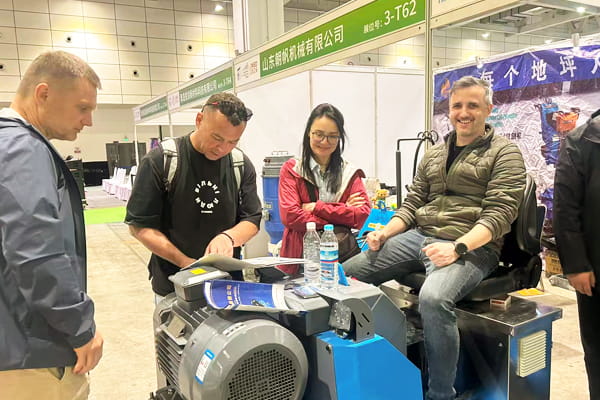
In projects like these, our role is not just to accompany the client to meetings. We act as the client’s field team in China: helping to ask the right questions, see the production firsthand, verify the technical base, gather materials, and understand who is worth continuing to work with.
Mini-case in numbers: what was done for the client
Client’s task: to study the market of polyurethane-cement flooring system manufacturers in China and find direct factories that could be relevant for an industrial B2B project.
Key supplier requirements:
- only direct factories with their own R&D base and laboratory;
- intermediaries and trading companies were not considered;
- experience exporting to the EU and USA;
- availability of technical documentation and certificates;
- presence of solutions for food and industrial facilities;
- coating heat resistance up to +120/+150 °C;
- possibility to apply on young concrete within 7–14 days;
- vapor permeability and suitability for complex industrial substrates.
Research geography: several industrial regions of the PRC, including Guangdong Province, Fujian, and the Shanghai industrial cluster.


What was accomplished:
- studied the segment of polyurethane-cement systems for industrial floors in China;
- compiled a general list of 6 Chinese suppliers;
- conducted primary and secondary manufacturer selection;
- excluded intermediaries and companies without a clear production base;
- collected technical specifications and commercial proposals;
- negotiated with manufacturers to clarify system compositions, delivery terms, documentation, and suitability for the client’s task;
- planned a business trip to China;
- personally visited the 3 largest manufacturers from the list, including Nippon Paint China;
- client accompaniment at factories and laboratories was personally conducted by Dmytro Bielousov.
Practical outcome: the client received not just a “supplier list” but a verified market map: who can be considered further, which systems fit the industrial task, where additional documents need to be requested, and what risks exist related to shelf life, application technology, and export delivery.
What Is Important to Check When Choosing a Flooring Manufacturer in China
1. Manufacturer or Trading Company?
In the coatings and construction chemicals segment in China, many companies sell well but are not full-cycle manufacturers. This is not always negative, but for complex industrial systems, it is crucial to understand who is responsible for the formula, production, batch consistency, technical support, and handling claims.
2. Is Technical Documentation Available?
Minimum documentation set:
- TDS / product technical datasheet;
- SDS / MSDS safety sheets;
- application instructions;
- substrate requirements;
- curing times;
- temperature limitations;
- chemical resistance;
- shelf life and storage conditions;
- packaging and labeling;
- environmental and safety documents if required for the client’s market.
3. Can the Manufacturer Explain Product Limitations?
A good technical supplier does not claim their material fits everywhere. They explain where the system performs well, where additional layers are needed, and where an alternative solution is preferable.
For us, this is a key marker of adequacy. If the answer to any question is always “no problem,” issues may arise later.
For us, this is a key marker of adequacy. If the answer to any question is always “no problem,” issues may arise later.
4. Are There Real Application Cases?
For polyurethane-cement and epoxy floors, real-world projects are especially important:
- food factories;
- dairy production;
- meat processing;
- warehouses;
- logistics centers;
- aviation and machine-building plants;
- parking lots;
- laboratories;
- pharmaceutical premises;
- commercial kitchens;
- freezer rooms.
5. How Is Batch Stability Controlled?
Repeatability is crucial for industrial coatings. If a client purchases material for a large site or plans regular orders, it is necessary to understand:
- whether batch control exists;
- how batches are labeled;
- how raw materials are stored;
- how viscosity, color, reaction, and curing are checked;
- how the manufacturer handles claims;
- whether they can provide samples from a specific batch.
6. Is Packaging and Logistics Suitable for Export?
Coatings, chemical compounds, and construction chemicals often have specific requirements for packaging, labeling, storage, temperature, shelf life, and transport documentation.
Before the agreement, it is important to verify in advance:
Before the agreement, it is important to verify in advance:
- packaging type: buckets, canisters, bags, A/B-component kits;
- batch weight and volume;
- shelf life;
- temperature regime;
- hazard classification in documents;
- possibility of sea, road, air, or multimodal delivery;
- requirements for MSDS, transport documents, and customs clearance.
Shelf Life of Polyurethane-Cement Systems: A Hidden Risk When Sourcing from China

One important detail often overlooked in catalogs is the material’s shelf life. For polyurethane-cement, epoxy, and polyurethane flooring systems, this is a critical parameter because the material is usually supplied not as a single product but as a set of components: resin, hardener, dry mineral part, pigment, finish coat, or additional additives.
Different components may have varying shelf lives. In similar systems like Sika Ucrete, shelf lives of 6, 9, 12 months or more are common—depending on the specific system, component, and storage conditions. Therefore, the phrase “polyurethane-cement coating shelf life is 6 months” may be true for a particular product or component but cannot be automatically applied to all polyurethane-cement systems.
This is especially important when sourcing from China. Even if the full shelf life is 6 months, the client must consider not the period from the production date, but the remaining shelf life at the moment of actual application on site.
Example of the risk:
- the material was produced 2 months ago;
- the supplier ships it from stock instead of producing a fresh batch;
- sea freight, customs clearance, and inland logistics take another 1.5–2.5 months;
- the client’s site is not ready for application immediately upon arrival;
- at the time of application, only 1–2 months remain before expiration.
Formally, the product may be “fit for use” at shipment. Practically, this already poses a risk for the project: the material may lose stability, change viscosity, mix poorly, spread unevenly, cure inadequately, or cause defects after application.
What Must Be Checked Before Payment
Before ordering polyurethane-cement coatings, epoxy self-leveling floors, or polyurethane finish systems from China, you must request from the manufacturer:
- TDS / technical datasheet for each system;
- SDS / MSDS for each component;
- shelf life of each component separately;
- storage conditions: temperature, humidity, protection from frost and direct sunlight;
- photos of labels showing production date, expiry date, and batch number (batch number / lot number);
- confirmation that the batch will be freshly produced, not old stock;
- minimum remaining shelf life at the shipment date;
- transportation rules and allowable temperature fluctuations during transit.
What to Specify in the Order or Contract
For an export B2B project, it is better to specify in advance not only the product name and price but also the conditions regarding shelf life.
It is safer to fix the following wording:
“The supplier is obligated to ship freshly produced material. The remaining shelf life of each component on the shipment date must be at least 80–90% of the full shelf life specified in the manufacturer’s technical documentation. Shipping material with a shorter remaining shelf life is allowed only after written agreement with the buyer.”
If the material is needed for a large facility, it is also advisable to request photos or videos of the batch labeling before shipment and include production date verification in the inspection checklist.

Author’s Tips
My practical advice: don’t buy industrial flooring coatings “off the shelf” before you see the production date and shelf life of each component. This is important even for regular paint, but mistakes with polyurethane-cement systems cost more: if the material performs poorly on site, you lose not only the batch cost but also money spent on substrate preparation, contractor work, facility downtime, and rework.
Second tip — don’t accept the supplier’s phrase “the shelf life is fine.” You need photos of the label, batch number, and technical datasheet. In China, many sales managers think only in terms of shipment: if the product can be shipped today, it’s “fine” for them. But for a B2B client, the key question is whether the material will perform reliably 2–4 months later when it actually arrives, clears customs, and reaches the site.
Third tip — when inspecting the factory or batch, be sure to add a separate item: check the production date / expiry date / batch number on each component of the set. If the system consists of 3–4 components, you cannot check only the main bucket or just the outer box. One expired or nearly expired component can ruin the entire system.
Fourth tip — if the project is urgent but the site is not ready yet, it’s better to first agree on the technical system, samples, and documents but not to buy the full batch in advance. For such materials, “just in case” storage can turn into a loss of shelf life.
For us, this is one of the markers of professional business support in China: to check not only price, brand, and a nice catalog but also hidden procurement parameters — production date, remaining shelf life, storage conditions, batch labeling, and material suitability for the client’s real site.
What a B2B Client Gains from Business Support in China
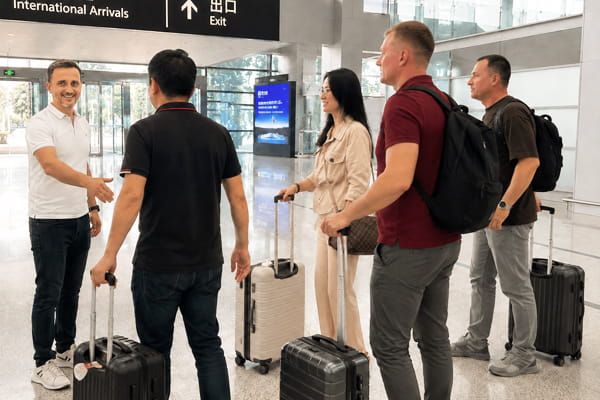
In our approach, the value of a business trip to China is not in the number of factories visited. The value lies in the quality of selection and in the fact that after the visit, the client clearly understands the next step.
As a result of such a project, the client may receive:
- a list of manufacturers and technical solutions for flooring systems;
- photos and videos from factories, laboratories, showrooms, and negotiations;
- comments on each company;
- a comparison of polyurethane-cement, epoxy, polyurethane, and specialized systems;
- a list of documents to request;
- recommendations for ordering samples;
- a preliminary risk assessment;
- an understanding of where a factory audit is necessary;
- clarity on which systems suit their facility and which are better to avoid.
After visiting factories and laboratories, the client obtains a structured picture: which manufacturers fit, which systems to consider, which documents to request, and which risks to check before placing an order.
How Our Services Help Execute Projects in China
Product and Factory Sourcing in China
If you don’t yet have a factory, we find not just contacts online but reliable manufacturers tailored to your technical specifications.
- Sourcing factories for polymer and epoxy flooring, concrete paints, and coatings;
- Finding coatings for food production and warehouse zones;
- Selecting antistatic and specialized flooring systems;
- Supplying construction chemicals and related coatings;
- Locating suppliers across any other niches in China.
Business Support in China
Whether you need to visit factories, labs, or exhibitions in person or remotely — we fully manage the organization.
- Planning the optimal trip itinerary;
- Coordinating and arranging meetings with factories;
- Accompanying and assisting during live negotiations;
- Translating technical questions into Chinese;
- Documenting agreements, deadlines, and samples;
- Protecting your interests with the sales departments.
Factory Inspections in China
Once a manufacturer is selected, a key stage is quality control, production audit, packaging, and documentation verification.
- Factory inspections before large orders;
- Control of special requirements for food production facilities;
- Inspection for goods produced under your brand;
- Reliability audits of new or unfamiliar factories;
- Mitigating risks of packaging and labeling defects;
- Verification of chemicals before shipment from China.
Conclusions from the Author and the Easy China Business Team

In the category of industrial flooring coatings from China, you cannot think with the logic of “finding the cheapest supplier.” Here, a systemic approach is required: facility, load, substrate, chemistry, temperature, sanitation, documentation, application, quality control, and long-term performance.
Nippon Paint China is interesting as an example of a large manufacturer of coatings and industrial finishes with a systematic approach, R&D base, and a broad portfolio of solutions. But even when working with a major brand, the right question is not “can we buy it?” but “which system fits our facility and how to verify this before the contract?”
This is exactly why you need manufacturer sourcing, business support at factories, working with technical materials, and factory inspections in China. In B2B projects involving industrial flooring, a mistake at the start can cost more than the purchase itself.
Need to verify the manufacturer, system, and documents before purchase? We organize a business trip to China tailored to your project
We work as a system:
pre-start economics → factory sourcing for your task → China business trip plan → on-site support in China → control points → reporting → QC audits → legal documentation → logistics from China → customs clearance.
pre-start economics → factory sourcing for your task → China business trip plan → on-site support in China → control points → reporting → QC audits → legal documentation → logistics from China → customs clearance.
What you get in 3–5 days in China
- trip program tailored to your category (market overview + 4-7 relevant factories);
- guide-translator experienced in business negotiations and technical communication with factories;
- negotiation protocols and recording of terms;
- finalist list and next steps plan: samples → purchase/production contract → inspection → shipment.