
Logo
EN
EN
RU
UA
  • About Us
    • About the Company
    • Team
    • Reviews
    • Vacancies
    • Contacts
    • Partners
    • Cooperation
  • Logistics
    • Air Delivery
    • Rail Freight
    • Sea Freight LCL
    • Container FCL Shipments
    • Multimodal Transport
  • Services in China
    • Product and Factory Sourcing in China
    • Contract Manufacturing in China OEM/ODM
    • China Product Inspection & Factory Audit
    • Procurement Outsourcing in China
    • China Purchasing Agent for Bulk Orders
    • Marketplace Seller Services in China
    • China Business Support: Trade Shows & Factories
    • China Export Agent Service
  • Blog
    • Articles
    • Case Studies
    • Video Releases
    • We're in the media
    • FAQ Answers
  • ✨ AI Help
    • AI Idea Generator
    • AI Exhibition Search Assistant
    • Virtual Logistician
    • Volume and Density Calculator
    • Container Loading Calculator
+86(138)0242 8487
Telegram | Whatsapp
Logo
  • Home
  • Blog
  • Top 10 Chinese Websites for Wholesale Purchasing

Top 10 Chinese Websites for Wholesale Purchasing. Comparison Table

Dmitry Belousov
Dmitry Belousov, CEO ECB
11+ years of experience in contract manufacturing in China: White Label, OEM/ODM, 3D models and tooling, quality control (QC).
Languages: EN, CN, RU, UA, TR
Updated: 07.01.2026

If you are sourcing products from China for your business, choosing the “right website” solves half the problem. The wrong one leads to classic issues: wrong supplier, wrong terms, wrong price, wrong quality.
In this article, we present 10 platforms where suppliers and products for wholesale are actively sourced. Plus — a comparison table and a concise selection guide.

China is one of the world’s largest product manufacturers and a leader in wholesale sales. It hosts a huge number of online platforms focused on both small and large wholesale orders. 
One advantage of working with Chinese wholesale stores is that you can find not only unique products but also place orders directly with manufacturers.
This enables purchasing without intermediaries, thereby reducing costs and increasing your own sales.
Many Chinese wholesale online stores target international cooperation, offering well-designed interfaces, detailed product descriptions, and convenient features that simplify communication between client and supplier.
The number of wholesale platforms in China is growing daily, but not all are suitable for business.
When choosing, it is important to consider multiple factors: reputation, product range, prices, payment methods, customer support availability, transaction security, and more.
Conducting this analysis by yourself can take a lot of time. Therefore, we have already done it for you and are ready to share a list of the best wholesale online stores in China.
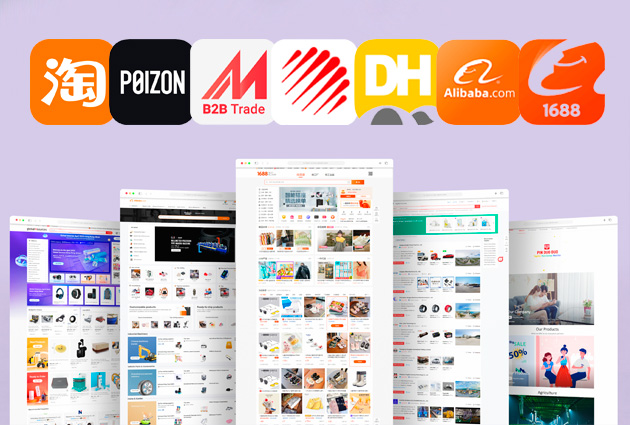
Top 10 Chinese websites for B2B product sourcing from China.
WE'LL FIND AND COMPARE 3–5 MANUFACTURERS FOR YOU
We will find products and factories in China, compare terms, calculate your project’s economics, and suggest the most profitable options.

How to Choose a Platform in 60 Seconds (5 Questions)

Answer these 5 questions to immediately narrow down your options:
  1. Do you need large/medium B2B wholesale or small batches/samples?
  2. Do you want to work directly with a factory (OEM/ODM) or is a trading company acceptable?
  3. Can you pay within China (Alipay/Chinese bank card) or do you need international payment options?
  4. Is a secure transaction/buyer protection more important, or the “lowest” price (with risks)?
  5. Are you purchasing mass-market products or looking for niche/innovations/technology?

Quick Summary (If You're Short on Time)

  • Alibaba / Made-in-China / Global Sources - international B2B platforms, easier to start with.
  • 1688 - often offers the best prices and more factories, but requires China-based payment and communication.
  • HKTDC - convenient if you are building a brand/packaging and want a “showcase of solutions”.
  • YiwuGo - ideal if you are interested in the Yiwu market and need a wide range of “mass-market” products.
  • DHgate / Pinduoduo - small batches, ideas, testing; higher risk in quality and communication.
  • Poizon / Youpin - more focused on brands/originality and innovations (usually requires an agent in China).

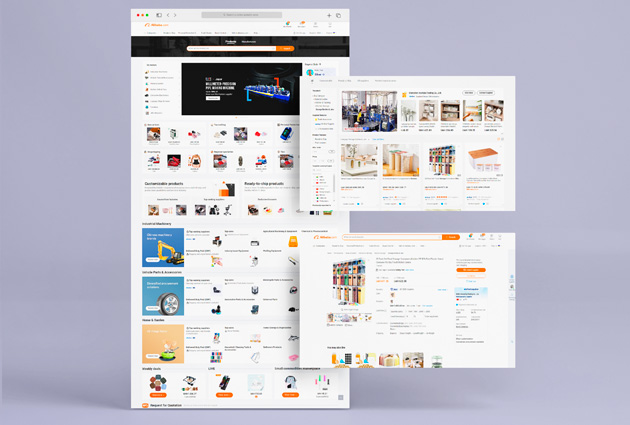
1. International B2B Platform Alibaba.com

International B2B platform Alibaba.com
Alibaba is one of the clearest entry points into international B2B: many categories, numerous sellers, fast responses, convenient filters, and offer comparisons.
The platform is well-suited for starting and initial supplier selection, but it is important to understand that a significant portion of sellers are trading companies, so the “listing price” does not always equal the factory price.
A particular advantage of Alibaba is Trade Assurance: a tool that helps reduce transaction risks (for example, regarding order and delivery terms within the service’s rules).
The platform also features AI search and selection tools: “smart” search, recommendations, query hints, and acceleration of initial research — convenient when you need to quickly gather options by product, specifications, and price range.

Main Advantages:

  • Trade Assurance — an additional layer of protection within the platform (does not replace contracts or QC but reduces some risks).
  • AI search/selection — find relevant products and suppliers faster, reducing manual routine in the initial stage.
  • Wide category selection + filters (price, MOQ, rating, reviews).
  • Simplified communication: chat and basic transaction tools, with auto-translation into necessary languages.

Disadvantages and Risks:

  • Often you communicate not with the factory but with a trading company — an intermediary → higher price, weaker control, and factory visits are difficult.
  • Trade Assurance does not cover quality “according to your specifications” and does not replace inspection; platform arbitration often sides with the seller, not the buyer.
  • Even with a good listing, discrepancies in materials, components, or packaging can occur without a fixed specification.
How to Reduce Risk (Our Practice):
Clarify the supplier’s role: factory or trading company, request proof of production (address, photos/videos of the line, product range).
If obtaining proof is not possible or doubts arise: arrange for an inspector to visit the factory.
Fix the specifications: materials, dimensions, tolerances, packaging, labeling, components.
Perform QC inspection of the batch before shipment (according to your inspection plan), not “after arrival”.

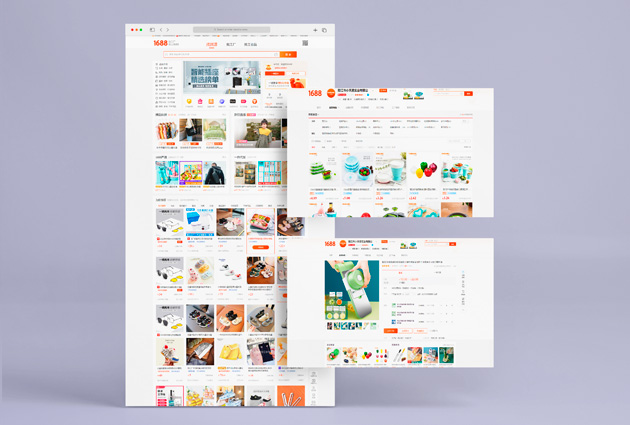
2. Chinese B2B Platform 1688.com

Chinese B2B platform 1688.com
For a long time, 1688 remained an “internal” tool of China: the platform still hosts mostly manufacturing factories rather than trading companies, often offering the best prices for wholesale purchases, but access, payment, and communication are more complex.
Now, the entry barrier for foreign buyers is gradually lowering: 1688 has launched a global version for the international market (1688 Global) with several built-in languages, and AI tools are developing to speed up product search and analog selection, although AI search still operates primarily in Chinese.
If you are sourcing for business and want to maximize price and assortment advantages, 1688 remains one of the strongest sources.
However, the logic remains unchanged: without a clear technical specification, a fixed sample, and quality control, it is easy to receive “almost the same” product, especially in the first batch.

Main Advantages:

  • The platform hosts mostly manufacturing factories rather than trading companies.
  • Often offers the best prices in mass categories and allows bargaining.
  • More opportunities for OEM/ODM customizations if the process is properly structured.
  • AI tools in Chinese, with well-crafted prompts, accelerate initial research and analog selection.
  • Chinese companies have their own internal secure transaction system, providing additional leverage on factories and enabling quick arbitration within Chinese jurisdiction, unlike international arbitration.

Disadvantages and Risks:

  • Even with global tools, 1688 still requires discipline and knowledge of Chinese: supplier role, terms, quality, and cultural nuances.
  • Without quality control and fixation of the “golden sample,” technical specification, and terms, the risk of discrepancies is high.
  • Payment and communication can remain more complex than on international B2B platforms, but with proper planning and conducting transactions through a Chinese company, it is safer.
How to Mitigate Risk (Our Practice):
Ideally, delegate processes to experienced service companies in China with a solid reputation and extensive experience in this field.
Verify the counterparty’s role (factory or trader) and confirm production via video materials and factory visits by an inspector.
Document project agreements in correspondence, preferably on WeChat or within the 1688 platform chat.

Purchase or produce samples → fix the “golden sample” → batch to series production → final QC before shipment.
Always perform QC inspection of the batch before shipment (according to your inspection plan), not “after arrival,” and in the case of production, before paying the main payment (typically 60-70% of the invoice).

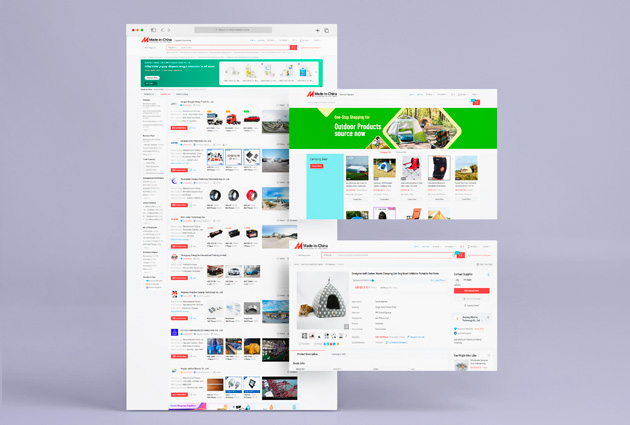
3. Made-in-China.com

Made-in-China.com
Made-in-China is a convenient B2B platform for finding manufacturers, especially in industrial categories and components.
It mainly specializes in the following areas: industrial equipment, electronics, accessories, clothing, auto parts, home goods, leisure, and sports products.
One of its strengths is the ability to conduct secure transactions through Secured Trading Services (STS): payments are held within the platform until confirmation of product availability and inspection reports. This reduces some risks at the payment stage.
However, it is important to understand the limits: STS does not protect against supplier actions after the payment is released, so it remains critical for businesses to establish their own quality control and logistics processes.
An additional downside is an unfavorable payment system due to fees and exchange rate differences when converting to USD. 

Main Advantages:

  • Secured Trading Services (STS) secure transaction: payment is “frozen” within the platform until confirmation of the inspection report and product availability at the manufacturer’s warehouse.
  • Well suited for industrial categories, equipment, and components.
  • More user-friendly in language and navigation compared to domestic Chinese platforms.

Disadvantages and Risks:

  • Payments can be costly: fees plus exchange rate differences when converting to USD.
  • Secure transaction does not protect against dishonest supplier actions after payment release → independent inspection and clear logistics are still necessary.
  • Terms are often FOB: this entails an international contract, SWIFT payments, and the need to handle customs clearance (or delegate it to specialists).
How to Mitigate Risk (Our Practice):
If you decide to work with a supplier from this platform, we recommend starting cooperation through a Chinese service company with relevant experience — this will increase transaction security.
If the delivery is FOB — specify responsibility, documents, deadlines, and product specifications in the contract to avoid “collecting” terms through correspondence.

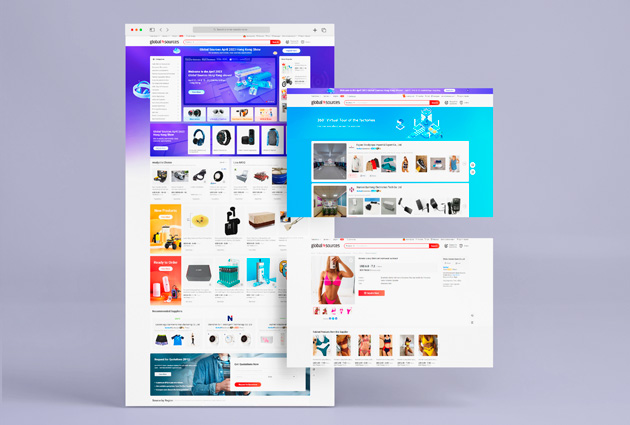
4. B2B Platform Global Sources

B2B Platform Global Sources
The key difference of Global Sources from many other B2B platforms is its exhibition infrastructure. The platform is not limited to a “supplier directory”: it organizes offline thematic trade shows where you can personally meet manufacturers of relevant categories, request catalogs, take samples, and assess quality at factory booths.
This is a powerful format for selection: you quickly understand the supplier’s level and product quality “in person,” not just from pictures.
Another important aspect is the development of online formats: the platform offers online visits and live streams of exhibitions, as well as 3D tours of major suppliers and factories.
This is convenient when you are not ready to travel to a trade show but want to see the assortment and the manufacturer’s “showcase.”

Main Advantages:

  • Offline exhibitions: personal meetings with manufacturers and company management, catalogs, samples, and quality assessment at booths.
  • Online broadcasts and remote visits, 3D tours of suppliers and factories.
  • Many suppliers focused on export and regular deliveries.

Disadvantages and Risks:

  • The selection is not equally broad across all categories.
  • The “exhibition showcase” does not replace thorough verification: supplier role, documentation, quality control.
  • Prices may be higher than on China’s domestic market and are oriented towards Western audiences.
  • Small test orders are generally not possible; only large wholesale volumes are accepted.
How to Mitigate Risk (Our Practice):
Use exhibitions and 3D online tours to create a short-list (3-7 factories) and gather ideas for assortment expansion.
When planning offline exhibition visits, arrange your business trip in advance, include several relevant factories in your visit plan, and coordinate the visit schedule and trip planning through a service company with a professional guide-translator.

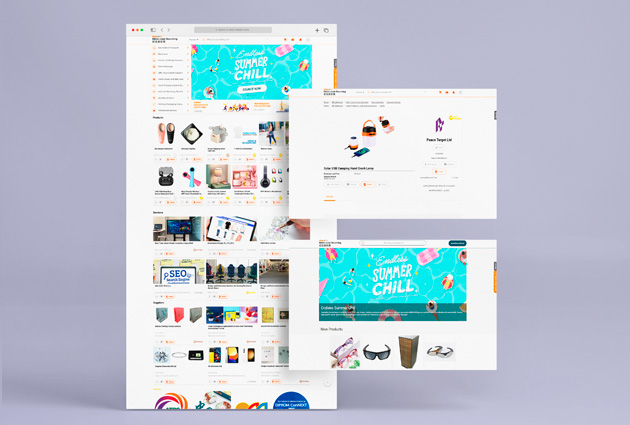
5. B2B Platform HKTDC Sourcing

B2B Platform HKTDC Sourcing
HKTDC Sourcing operates at the intersection of B2B and B2C: here you can find offers both for wholesale purchases and for more “catalog-style” product selection.
Common practical categories include clothing, electronics, gadgets, and related products.
The platform can be especially useful if you are considering production under your own brand: there are many offers from trading companies and service agents.
However, there is a nuance to consider in advance: in real operation, some inquiries may receive no response, or replies may come with significant delays.
Therefore, it is better to perceive HKTDC as a showcase for selection and ideas, while building communication and transactions through a clear process and alternative contact channels.

Main Advantages:

  • Focus on B2B + B2C: allows selecting options for different purchasing scenarios.
  • Often features interesting offers in clothing, electronics, and gadgets.
  • “Branding” options available: ready-made offers for branding plus service companies (logo/packaging/instruction/contract manufacturing).

Disadvantages and Risks:

  • Low response speed: some inquiries remain unanswered or replies come much later.
  • “Attractive offers” do not guarantee the supplier’s readiness to meet deadlines and requirements.
  • As everywhere, without clear specifications and quality control, discrepancies in batches are easy to occur.
How to Reduce Risk (Our Practice):
Use this platform as a source of ideas to find offers on other resources.
In the Services section, you can find service contractors who can help visualize references for future product ideas.

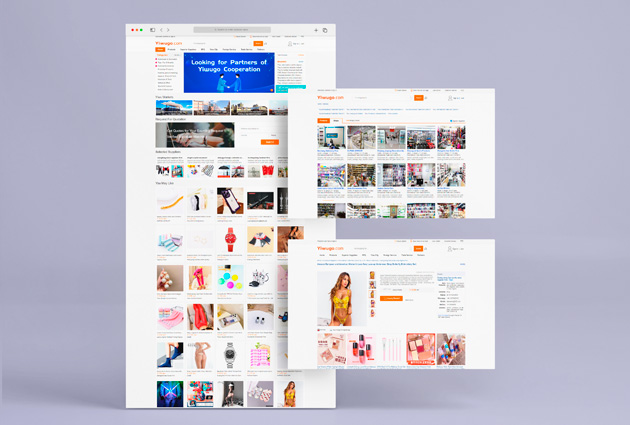
6. The Largest Market Website in China: Yiwu Go

The Largest Market Website in China Yiwu Go
YiwuGo is the online showcase of the Yiwu market, renowned for its vast assortment in “mass-market” categories.
If you need to quickly assemble a product matrix, find analogs, select “shelf-ready” items, or expand your range, YiwuGo often helps faster than classic factory catalogs.
However, it is important to understand the market nature: the seller’s role can vary (showroom, trader, factory representative), and without a control process, quality consistency may differ from batch to batch.
In B2B reality, YiwuGo works best when you already have discipline: you clearly understand product and packaging requirements, know how to verify suppliers, and organize batch inspections before shipment.

Main Advantages:

  • Extremely wide assortment across mass-market product categories.
  • Fast selection of analogs and expansion of product matrix.
  • Convenient for rapid research before purchasing or production.
  • Most sellers are ready to show products live via video call.

Disadvantages and Risks:

  • Not always transparent: whether the seller is a factory or a trading company intermediary.
  • Product novelties and innovations appear here later than on B2B platforms.
  • Quality and completeness can “vary” without a fixed technical specification.
How to Mitigate Risk (Our Practice):
We recommend visiting the Yiwu market for sample purchases, personal meetings with factory management, and agreements on supplies and production. Always plan this trip in advance and bring a qualified guide-translator with you.
Remote purchasing or buying without on-site quality audits is not recommended, as even video reviews of offered products can turn out to be very different in quality and specifications.

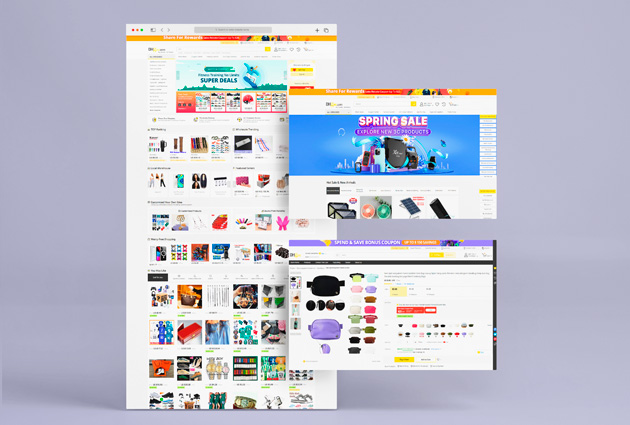
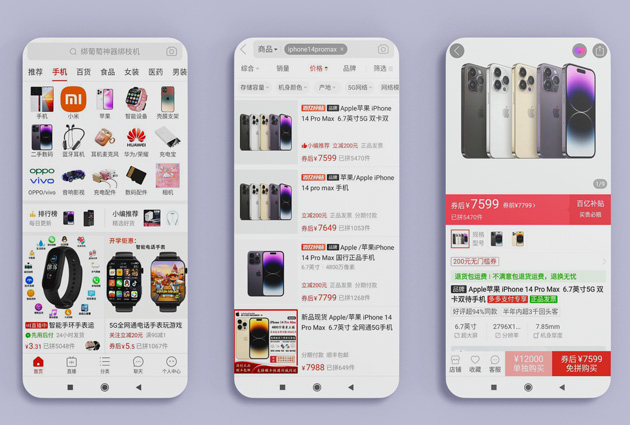
7. Chinese Marketplace DHgate

Chinese Marketplace DHgate
DHgate is often used as a testing channel: to get samples, check demand, and make small purchases of individual items.
This can be useful for a “quick entry.” However, for regular B2B branded supplies, DHgate rarely serves as a foundation: there is a wide variation among sellers, inconsistent quality, and sometimes brand copies and offers that carry legal and reputational risks (intellectual property).
In such cases, it is more important for business to build a stable process: factory, contract, specification, and quality control (QC).
In the proper approach, DHgate is a reconnaissance and testing tool. Once you see that the category is “viable,” it makes sense to move to the factory channel and quality control according to your standard, brand, and technical specification.

Main Advantages:

  • Convenient for samples and small batches.
  • A quick way to “feel out” a category and compare options.
  • A source for product ideas.

Disadvantages and Risks:

  • Quality heavily depends on the seller; batch repeatability is not guaranteed.
  • The platform hosts a huge number of trading companies; price offers are not the best.
  • The seller's role and product origin may be opaque.
How to Mitigate Risk (Our Practice):
Use DHgate as a testing channel: as a platform for ideas and sample purchases, not as a basis for supply.

8. Group Buying Marketplace Pinduoduo (拼多多)

Group Buying Marketplace Pinduoduo
Pinduoduo is not a classic B2B wholesale platform but a Chinese domestic model based on group buying mechanics, which creates an interesting price effect on individual items.
For business, the platform serves as a “thermometer”: to see how products and packaging appear on the domestic market, what specifications and configurations are sold, and what price levels consumers in China actually pay. This helps during research and preparing technical specifications.
However, directly transferring Pinduoduo logic to import and B2B supply is often not possible: access and payment usually require China-based infrastructure, and the model does not focus on export documents or batch stability.
Therefore, it is more appropriate to use the platform as a source of signals and ideas, while building purchasing and production separately and only through a Chinese company – an agent with its own infrastructure, inspection staff, and warehouse facilities for storage and consolidation.

Main Advantages:

  • Good prices (if monitored regularly) can be found on smartphones, gadgets, and branded clothing.
  • Useful for analyzing the Chinese domestic market (prices, packaging, configurations).
  • A valuable source of ideas before OEM/ODM or factory search.

Disadvantages and Risks:

  • Chinese infrastructure (registration/access/rates/payment) is often mandatory.
  • High risk of discrepancies if purchasing “by picture” without verification.
  • No buyer protection; the store does not bear responsibility for sold products.
How to Mitigate Risk (Our Practice):
Use the platform as market research, as a source of product ideas and references for technical specifications.

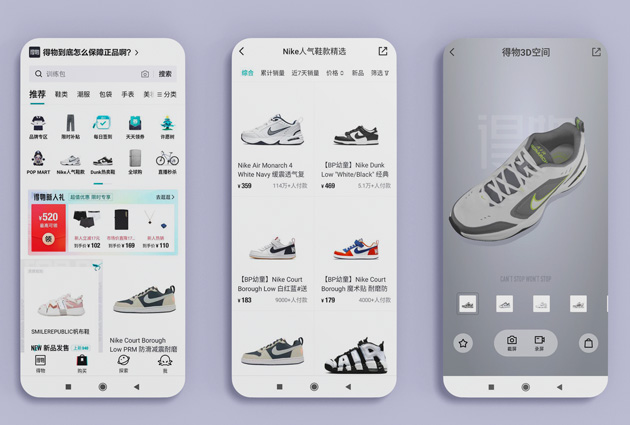
9. Branded Goods Marketplace Poizon (Dewu)

Branded Goods Marketplace Poizon (Dewu)
Poizon (Dewu) is primarily an internal Chinese ecosystem focused on specific categories (often “brand/streetwear”), platform rules, and its own product circulation logic.
In the B2B context, it is not a substitute for factory platforms: here you address a different task — working with a specific category and sales model where platform rules, access, restrictions, and logistics are crucial.
You can find designer and branded apparel, perfumes, cosmetics, accessories, and even electronics here.
To have orders delivered to your country, a reliable intermediary in China is required who will handle product purchase and payment, consolidation at their warehouse, inspection, and full logistics.
Therefore, Poizon suits those who clearly understand the category and model, rather than as a “universal wholesale purchasing site.”

Main Advantages:

  • Suitable for specific categories where market rules and ecosystem matter.
  • Competitive prices compared to offers in the US and Europe, often 15-50% cheaper.
  • Can be a source of assortment and references for popular items.

Disadvantages and Risks:

  • Requires a partner in China and a separate logistics model.
  • Platform restrictions and rules often do not align with classic import procedures.
  • Not a tool for OEM/ODM production nor a “factory platform.”
How to Mitigate Risk (Our Practice):
Use this platform only for specific categories — original branded clothing, footwear, and accessories — and calculate the economics in advance. Work exclusively through a verified agent company in China with relevant experience and a good reputation.

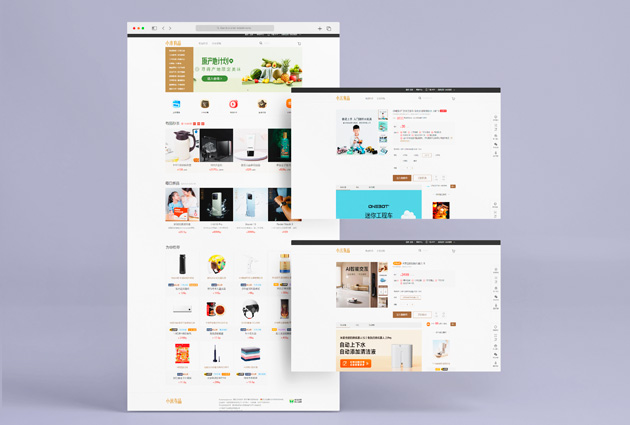
10. Xiaomi Youpin Crowdfunding Platform

Youpin Crowdfunding Platform
Xiaomi Youpin serves as a showcase for product solutions: innovations, configurations, packaging, UX logic — what resonates with the market and how it is presented.
For business, it is a powerful source of ideas and references—especially if you plan to launch a product under your own brand and need to develop a precise technical specification.
On Youpin, you can quickly understand which features and configurations are standard, how packaging looks, and what accessories are included.
However, Youpin rarely acts as a direct channel for “wholesale import purchasing” in the classical sense.
More often, it is a starting point for R&D: exploring new ideas, formulating requirements, then moving to factory sourcing and launching OEM/ODM with samples, contracts, and QC.
In this scenario, Youpin provides speed at the idea stage, while supply stability is ensured by the process.

Main Advantages:

  • Excellent source of innovations, references, and product logic.
  • Helps quickly gather requirements for configuration, packaging, and functionality.
  • Useful for preparing technical specifications before OEM/ODM.

Disadvantages and Risks:

  • Access and payment are often tied to China.
  • Does not replace the factory channel and contractual model.
  • It is not an OEM/ODM tool nor a “factory platform.”
How to Mitigate Risk (Our Practice):
Use Youpin as a source of interesting ideas and innovations, a reference and base for forming technical specifications. Then follow the classic path — factory/production: samples → fixation → batch → QC → logistics.

If your goal is OEM/ODM under your brand

We calculate project economics before the start: cost price, packaging, logistics, defect risks.

Technical specification + “golden sample”: the benchmark against which the entire batch is compared during serial production.

We fix the terms: specification, tolerances, deadlines, responsibilities, staged payments.

QC quality audit as planned: control during serial production + final inspection before payment and shipment.

Logistics tailored to your business model: Incoterms, delivery route, documentation, cargo insurance, customs clearance.

How we evaluate factories: factor rating
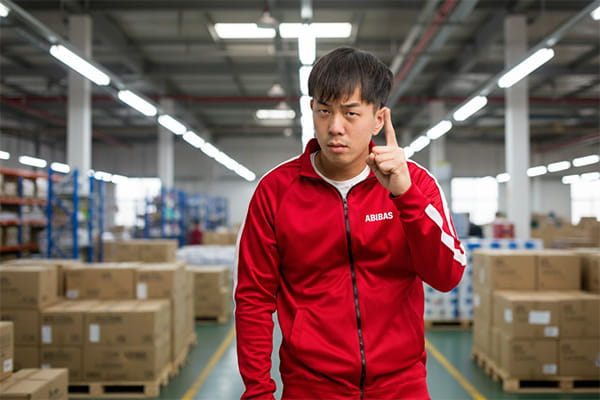
A joke from real negotiations: "My friend, the competitor, is a snail, I am lightning! He takes a month to do it, I do it in 10 days. Time is yuan!"

Comparison of Chinese Platforms in Table Format

Platform
Type
Suitable For
Payment/Access
Key Risk
Recommendations
Alibaba.com
International platform, B2B
Startups, B2B wholesale purchasing, fast research, OEM/ODM
International payment methods (including via Trade Assurance): cards, bank transfer (T/T), sometimes PayPal.
Main currency: USD

Many counterparties - trading companies, intermediaries. Trade Assurance does not cover quality risk “according to your specifications.”
Use Trade Assurance as a transaction tool, but conduct QC separately: independent inspection + fixation of specifications/packaging/tolerances.
1688.com
Chinese B2B platform
For procurement in industrial categories, components
Chinese payments: Alipay, Chinese banks and cards (often), sometimes via partner/agent.
Main currency: CNY
Requires discipline in communication: documents, specifications, staged payments + language, communication + knowledge of Chinese customs
Work through a trusted partner in China, consulting with inspection. Conditions → “golden sample” → batch QC before shipment.
Made-in-China
International platform, B2B
For procurement and production, factories, pricing, OEM/ODM
Has secure deal STS (Secured Trading Services), but without guarantees.
Payments: cards/transfers.
Main currency: USD

Pricing policy is inflated, high commissions + exchange rate differences when converting to USD, logistics and customs complexities
We recommend working with factories from this platform through a Chinese service company with relevant experience - this will increase transaction security
Global Sources
International platform, B2B + exhibition ecosystem
For offline and online search of innovative ideas and novelties, factory sourcing, and direct contact with management
Often payment directly to supplier (T/T, L/C, etc.), platform serves as showcase/contacts.
Main currency: mostly USD

Often inflated price offers, oriented towards USA, EU, Australia, and African countries
Use as a source of ideas and as a platform for personal offline visits and sourcing (but with proper planning)
HKTDC Sourcing (Hong Kong)
International platform, B2B + B2C platform + exhibition ecosystem
Clothing, electronics, gadgets. Offers for branding and turnkey service companies (logo/packaging/instruction → contract manufacturing)
Often payment directly to supplier, methods depend on counterparty.
Main currencies: USD/HKD/CNY

In practice, often low response: inquiries may go unanswered or replies come with delay. “Attractive offer” ≠ readiness to meet deadlines and specifications
Make a short-list of ideas and immediately duplicate inquiries through alternative platforms without waiting for answers
Yiwu Go
Online showcase of China’s largest market in Yiwu
Mass-market goods, wide assortment, fast selection of analogs/product matrix
Payment/terms depend on seller; often via agent/intermediary in China.
Typically: Alipay/WeChat Pay/transfers.
Main currency: CNY

Not always clear who the seller is (factory/showroom/trader). Risk of varying quality and packaging consistency
Start with samples, fix the “golden sample,” perform batch inspection (especially packaging/completeness) and work through a trusted agent
DHgate
International marketplace B2B + B2C
Small batches, demand tests, samples, ideas for references and specifications
International payments: cards, sometimes PayPal/platform payments (depends on scenario).
Main currency: USD

Strong variation among sellers and quality. Risk of disputed goods (IP/counterfeits) + seller often not a factory
Use as a testing channel. Strictly filter sellers, avoid risks. For scaling - move to factory, OEM, ODM + QC
Pinduoduo
Chinese B2C app / social commerce
Market reconnaissance: ideas, prices inside China, packaging/configurations, “what is being bought now”
Chinese payments (WeChat Pay/Alipay), access to Chinese infrastructure required.
Main currency: CNY

Not for export deals and documentation. High risk if transferring “pictures/prices” to B2B without verification
Use as a source of references and signals for specifications. Build purchasing and production separately through an agent in China
Poizon (Dewu)
Chinese app, category-specific marketplace
“Brand/street” categories, assortment analysis, purchases within China for a specific model
Chinese payments, often requires a partner in China.
Main currency: CNY

Platform restrictions + logistics + economics (commissions/rules). Not a replacement for the factory channel.
Use only for specific categories of clothing, footwear, and accessories and calculate economics in advance
Xiaomi Youpin
Chinese ecosystem/solution showcase
Novelties, ideas, configurations, references for specifications (R&D) before OEM/ODM
Usually Chinese payments, access via Chinese infrastructure/agent.
Main currency: CNY

Not a direct wholesale channel for import. Access/payment and terms are not tailored for B2B supply
Use for gathering ideas: collect requirements for product, packaging, and configurations. Then proceed through the factory

Conclusions and Recommendations from Easy China Business

Easy China Business - Find, Verify, Deliver
You can work with Chinese wholesale platforms independently, but in practice, the main risks do not arise at the sourcing stage, but later — during supplier verification, payment, terms fixation, quality control, and logistics.
Therefore, for businesses, it is often more advantageous to proceed through a trusted intermediary company that manages the process “turnkey” and reduces the likelihood of losses on the first batch.
Why it is easier and safer for business to work through an intermediary:
Correct platform choice for the task. Different platforms solve different problems: some are better for starting out, some offer better prices, while others carry higher risks regarding quality and the seller’s role.
Supplier and role verification. It is important to understand who you are dealing with: a factory or a trading company, whether there is actual production, export experience, and discipline in documents and deadlines.
Secure payment and clear transaction scheme. Especially if the platform is focused on the Chinese domestic market and requires Chinese payment tools.
Quality control before shipment. Correspondence and “nice photos” do not guarantee batch compliance with your technical specification. Batch inspection, packaging, labeling, and completeness verification solve this.
Purchase and logistics. It is not enough just to “buy”; you need to properly receive the goods, inspect them, prepare documents, and deliver according to your model (Incoterms/route/customs).
An intermediary is not always a guarantee. The market does include scammers and “process-less” companies
Therefore, verify: reputation and reviews, case studies, length of operation; what exactly is included in the service (supplier verification, samples, QC, purchase, delivery); transparency: clear stages, documents, reports, responsibility.
If you wish, send a link to the product/supplier and your task (volume, market, requirements). We will advise which platform and working scheme will be the safest and most profitable.

💡 Useful services

You may also be interested in
Private Label Idea Generator
01/2026
AI Idea Generator for Private Label
From unconventional and sometimes wild ideas to a product that conquers shelves
Exhibition Search Assistant in China
01/2026
AI Exhibition Search Assistant in China
Helps select relevant exhibitions in China tailored to your niche, product, or product category
Virtual Logistician
01/2026
Virtual Logistician
Your smart assistant for optimizing shipments and careful packaging of cargo from China
Volume and Density Calculator
01/2026
Volume and Density Calculator
Instant calculation of cubic volume, dimensions, and weight of a batch for accurate logistics assessment
Container Loading Calculator
01/2026
Container Loading Calculator
Helps correctly calculate cargo dimensions and creates a container loading scheme

Answers to Frequently Asked Questions

Which to choose: Alibaba or 1688?

Alibaba is easier for starting and international communication. 1688 often offers better prices and more factories but requires discipline in communication, payment, and the creation and adaptation of technical specifications to Chinese standards, as well as quality control (QC) inspections.

Is Trade Assurance a quality guarantee?

It is a payment tool on the Alibaba platform, but quality “according to your technical specification” still depends on the specification, samples, and batch inspection by a third-party contractor.

Does STS on Made-in-China fully protect the deal?

STS reduces risk at the payment stage, but after payment release, independent QC and logistics control are still required. There are no guarantees as such.

Why do claims often arise without inspection?

Because correspondence does not catch discrepancies in materials, completeness, packaging, and labeling. After payment, proving defects and non-compliance is difficult and often impossible.

What to do if the supplier requests payment outside the platform?

In China, this is a standard practice explained by reducing commission costs for the supplier. Cooperation outside the platform is possible if a better price than on the platform is offered, and a contract is signed under Chinese jurisdiction (which requires an agent in China with a registered company). Mandatory conditions include a 30% advance payment and 70% after the QC audit of the goods.

Which sites are best for testing?

DHgate and domestic Chinese apps - as a test/research. For stable supplies, it is better to switch to the factory model.

Why can FOB complicate delivery?

Because it involves contracts, SWIFT/international payments, and customs clearance issues (either independently or through contractors).

How to reduce risk in the first batch?

Samples → “gold standard” → tolerance fixing → QC before payment and shipment.

Why need a "gold standard" if the terms are already agreed?

Photos and correspondence do not record tolerances and “minor details” that later give rise to complaints.
A gold standard is a benchmark against which the entire batch is compared: materials, assembly, color, configuration, packaging. Without it, the supplier and buyer often have “different understandings” of the same product.

When should quality control be performed: before payment or before shipment?

Ideally, in two stages:
at the start: supplier verification and confirmation of samples/specifications, advance payment of 30% of the invoice;
before final payment of 70% and shipment: final QC of the batch (according to the inspection plan) to avoid sending defective goods and paying for the delivery of problematic goods

Logo
A Company with Extensive Wholesale Experience
Wholesale Supply from China - Easy China Business
Instagram channel Easy China Business
Facebook channel Easy China Business
YouTube channel Easy China Business
Telegram channel Easy China Business
No. 39 Liu Hua Road, 2nd Floor, Liwan District, Guangzhou, Guangdong Province, 510000, China, Office E-12
Working Hours: Mon-Fri 09:00 to 17:00 GMT+3, Sat-Sun — Closed.

Guangzhou Easy China Business Address:
  • About Us
  • Logistics
  • Services
  • Reviews
  • Guarantees
  • FAQ
  • Careers
  • Public Offer
  • Privacy Policy
Logo
Guangzhou Easy China Business Address:
广州市荔湾区流花路39号, 二楼 
510000, China, Guangdong province, Guangzhou, Liwan District, Liu Hua Road 39, office E-12
Working hours: Mon-Fri from 09:00 to 17:00 GMT+3, Sat, Sun - closed.

  • About Us
  • Logistics
  • Services
  • Reviews
  • Guarantees
  • FAQ
  • Careers
  • Public Offer
  • Privacy Policy
Your type of business activity
What do you need in China?
Other requirements when working with China
Estimated first order value (USD)
Which country is the delivery planned for?
Please enter your contact details so we can get in touch with you.

By submitting this form you agree to our Privacy Policy

Form submission
Confirm that you are not a robot
or press Enter
EN
UA
RU
  • Blog
  • Case Studies
  • Reviews
  • Payment
  • Guarantees
  • FAQ Answers
  • Public Offer
  • 2026 Calendar
  • LOGISTICS »
  • SERVICES IN CHINA »
  • ABOUT THE COMPANY »
  • AI ASSISTANTS »
  • Poland
  • EU Countries
  • USA
  • Ukraine
  • Czech Republic
  • The delivery country and regional site settings will be changed
  • Select your regional site version ↓
  • Global
  • United Kingdom
  • Germany
  • Spain
  • Canada
EN
UA
RU
EN
UA
RU

Back

  • LOGISTICS ↓
  • Air Freight
  • Rail Freight
  • Sea Freight LCL
  • FCL Container Shipments
  • Multimodal Transport
EN
UA
RU

Back

  • SERVICES IN CHINA ↓
  • Product & Factory Sourcing in China
  • Contract Manufacturing in China
  • Product Inspection & Factory Audit
  • Procurement Outsourcing in China
  • China Purchasing Agent
  • Marketplace Seller Services in China
  • China Business Trip Support
  • China Export Agent Service
EN
UA
RU

Back

  • ABOUT US ↓
  • About the Company
  • Team
  • Vacancies
  • Contacts
  • Partners
  • Cooperation
EN
UA
RU

Back

  • AI SERVICES ↓
  • AI Idea Generator
  • AI Exhibition Search Assistant
  • Virtual Logistician
  • Volume and Density Calculator
  • Container Loading Calculator
  • Poland
  • EU Countries
  • USA
  • Ukraine
  • Czech Republic
  • The delivery country and regional site settings will be changed
  • Select regional site version ↓
  • Global
  • United Kingdom
  • Germany
  • Spain
  • Canada
EN
UA
RU
EN
UA
RU
  • Blog
  • Cases
  • Reviews
  • Payment
  • Guarantees
  • FAQ Answers
  • Public Offer
  • 2026 Calendar
  • LOGISTICS »
  • SERVICES IN CHINA »
  • ABOUT THE COMPANY »
  • AI ASSISTANTS »
EN
UA
RU

Back

  • LOGISTICS ↓
  • Air Freight
  • Rail Freight
  • Sea Freight LCL
  • FCL Container Cargo
  • Multimodal Transportation
EN
UA
RU

Back

  • SERVICES IN CHINA ↓
  • Product & Factory Sourcing
  • Contract Manufacturing in China
  • Product Inspection, Factory Audit
  • Procurement Outsourcing in China
  • China Purchasing Agent
  • Marketplace Seller Services
  • China Business Trip Support
  • China Export Agent Service
EN
UA
RU

Back

  • ABOUT THE COMPANY ↓
  • About Us
  • Team
  • Careers
  • We're in the Media
  • Contacts
  • Partners
  • Cooperation
EN
UA
RU

Back

  • AI SERVICES ↓
  • AI Idea Generator for Private Labels
  • AI Exhibition Search Assistant
  • Virtual Logistician
  • Volume and Density Calculator
  • Container Loading Calculator
Instagram channel Easy China Business
Facebook channel Easy China Business
YouTube channel Easy China Business
Telegram channel Easy China Business