Logo
EN
EN
RU
UA
  • About Us
    • About the Company
    • Team
    • Reviews
    • Vacancies
    • Contacts
    • Partners
    • Cooperation
  • Logistics
    • Air Delivery
    • Rail Freight
    • Sea Freight LCL
    • Container FCL Shipments
    • Multimodal Transport
  • Services in China
    • Product and Factory Sourcing in China
    • Contract Manufacturing in China OEM/ODM
    • China Product Inspection & Factory Audit
    • Procurement Outsourcing in China
    • China Purchasing Agent for Bulk Orders
    • Marketplace Seller Services in China
    • China Business Support: Trade Shows & Factories
    • China Export Agent Service
  • Blog
    • Articles
    • Case Studies
    • Video Releases
    • We're in the media
    • FAQ Answers
  • ✨ AI Help
    • AI Idea Generator
    • AI Exhibition Search Assistant
    • Virtual Logistician
    • Volume and Density Calculator
    • Container Loading Calculator
+86(138)0242 8487
Telegram | Whatsapp
Logo
  • Home
  • Blog
  • Business Trip to China: Independently, in a Group, or with a Guide

Going to the factory ourselves or hiring a guide? Pros and cons of a business trip to China

Dmitry Belousov
Dmitry Belousov, CEO of ECB
Over 11 years transforming contract manufacturing in China into a controlled system – White Label/OEM/ODM, 3D matrices, QC.
Languages: EN, CN, RU, UA, TR
Updated: 19.01.2026

China is open, visas are being issued, and the Canton Fair is once again breaking attendance records. We explore whether it’s better to visit factories alone, in a group, or opt for a personalized business trip. Comparing all three approaches.

A business trip to China is not just about “seeing factories.” It’s a way to quickly make decisions that could otherwise take months: selecting 2-5 suppliers, comparing terms, verifying production reality, and agreeing on quality, packaging, and deadlines.
But there’s one catch: the trip pays off only when you have a clear goal and plan. Otherwise, you’ll return with contacts, photos, and fatigue—but no results.
A well-planned business trip can recoup its cost on the very first purchase or production run.
ARE YOU LOOKING FOR RESULTS, NOT JUST A “TOUR”?
We arrange meetings in advance, accompany you on-site, and see the project through to completion

In Brief (30 seconds) if you’re short on time

  • If you need complete freedom and already have experience – you can go independently. But you pay with time and risks.
  • If you want impressions, networking, and to “understand how it works” – a group business tour is suitable. This is a “scouting” format, not for closing deals.
  • If you need conditions, agreements, control, and efficiency – individual support usually wins: meetings tailored to your product + translation/negotiations + documenting outcomes + a clear next step.

Article Contents

  • Independent Trip to China
  • Group Business Tour to China
  • Individual Support in China
  • Comparison of Business Trip Options to China
  • Preparation Checklist: Making Your Trip Worthwhile
  • Frequently Asked Questions

When a Trip to China Is Truly Justified
When a Trip to China Is Truly Justified

A trip makes sense if you have at least one of the following:

  1. You are already selling and want to increase your margin by working with direct suppliers or OEM/ODM (under your own brand).
  2. It is important for you to verify production “in person”: the workshop, equipment, warehouse, quality control, discipline.
  3. You need to compare 3-6-10 suppliers against the same technical specifications and receive comparable responses (not just “we can do everything”).
  4. You are attending an exhibition with the goal: contacts → meetings → terms → decision protocols.
If you do not yet have basic inputs (target price, volume benchmark, quality/packaging requirements) — it’s better to gather these first. Then the trip becomes a tool, not an adventure.

Option 1. Independent Trip to China
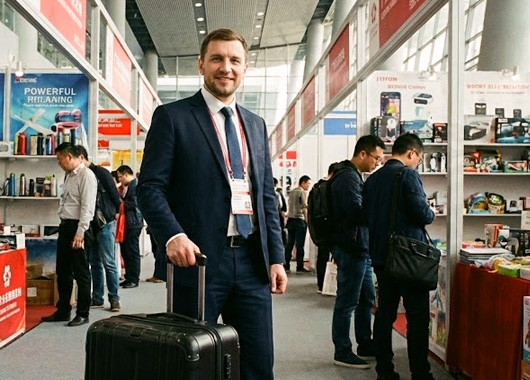
Independent business trip to China
Many entrepreneurs, especially at the start, think: “I’ll find everything myself. Why pay intermediaries?” It seems enough to know English, use an online translator, and have a few chats—and you can confidently fly to the factories.
In practice, an independent trip almost always begins the same way: you’ve contacted suppliers in advance, arrived, and try to fit 3-4 meetings a day while juggling daily logistics and moving around industrial zones.
By the first or second stop, it becomes clear that more time is spent not at the factory but on “supporting tasks”: travel, waiting, clarifying who actually makes decisions, and why answers keep changing.
The main risk is not that you “won’t find a supplier,” but that you won’t fix conditions in a way that they are later fulfilled: quality, packaging, deadlines, responsibility.
As a result, the trip may provide experience and contacts, but often requires a second iteration—with a system and support—to achieve results.

Main Advantages:

  • Maximum freedom: your route, pace, and priorities.
  • Direct experience: you see firsthand how production and negotiations work “on the ground.”
  • No intermediaries: you communicate directly and get a better feel for the people.
  • Apparent savings: you don’t pay an agency for support services.

Disadvantages:

  • Language and negotiations: even if communication is in English, “English for the deal” is often insufficient when discussing tolerances, packaging, warranty terms, penalties, deadlines, and responsibility.
  • Hard to compare suppliers: without a unified questionnaire and documented answers, everything turns into a collection of different promises.
  • Risk of wasting time on irrelevant ones: an office or showroom may look convincing, but it’s not always a factory.
  • Lower efficiency than it seems: you spend hours on logistics and coordination instead of key decisions.

Who it suits:

  • Entrepreneurs experienced with China who already understand the stages: specs → samples → approval → contract → production → QC → shipping.

When NOT to choose:

  • If it’s your first trip and you want “the best price and perfect quality right away.” The first time is usually more expensive precisely due to mistakes.

Option 2. Group Business Tour to China
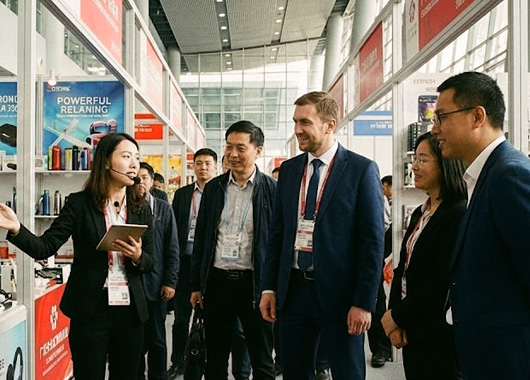
Group Business Tour to China
A group business tour is usually chosen by those who want to quickly “get into the topic”: see exhibitions, markets, a couple of factories, and understand what China looks like in a real business context.
It’s a comfortable format because the route and daily life are already organized: transport, hotels, and basic program points.
Within the tour, you get plenty of communication and observations: who ships what, where suppliers are found, and what mistakes newcomers make. Often, this is where the first “insights” appear that save time at the start.
But it is important to understand: the program is made “on average for the group,” so your tasks and your product are not always the focus.
Due to the format and timing, negotiations are often superficial: there is little time, decisions are not fixed, and deep issues (technical specifications, OEM/ODM, packaging, responsibility, quality control) are left “for later.”
Therefore, the tour works well as reconnaissance and networking, but if the goal is conditions and specific agreements for your project, usually the next step is required.

Main Advantages:

  • Tour-side organization: transport, hotels, basic program.
  • Networking: you communicate with entrepreneurs and can quickly gather practical observations.
  • Market reconnaissance: useful to see “how it’s arranged,” understand prices, packaging, and assortment.

Disadvantages:

  • Weak focus on your product: the group goes where it is convenient and interesting for the majority, not where it is optimal for your task.
  • Negotiations often superficial: little time, decisions are not fixed, the format is more “to look around” than “to agree.”
  • Less control: you rarely delve deeply into production nuances because this is not the tour’s goal.

Who it suits:

  • Those who are just entering the topic and want to understand “what China looks like for business” without strong preparation.

When NOT to choose:

  • If you are going for conditions, contracts, and a controlled process. For this, a different format is needed.

Option 3. Individual Support in China (Tailored to Your Project)
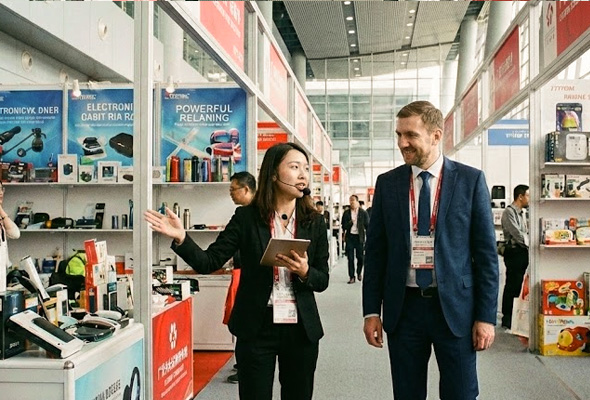
Individual Support in China (Tailored to Your Project)
Individual support is chosen when the trip should deliver results, not just impressions: specific suppliers, clear terms, and a controlled process after returning.
The key difference here is that the work starts before departure: you define product inputs, target figures, and requirements, while the team pre-selects relevant factories and schedules meetings in advance.
In China, you don’t “hop between points,” but follow a route tailored to your task. Meetings include translation/negotiations, verification of production reality, and most importantly – documentation of outcomes: what was agreed, confirmed parameters, samples to be sent, deadlines, and next steps. This reduces the risk of “polite promises” turning into surprises later.
An advantage of this approach is project continuation after the trip: sample approvals, production control, quality checks, and support until completion.
As a result, you receive not just contacts, but a chain of decisions leading to a predictable outcome.

Main Advantages:

  • High Efficiency: you visit only places with a real chance of success for your product.
  • Stronger Negotiation Position: fewer vague promises, more concrete terms.
  • Agreement Documentation: after meetings, you get a document, not just verbal agreements.
  • Post-Trip Continuity: once you’ve left, the process continues—otherwise, the trip becomes just an episode.

Disadvantages:

  • Dependence on the Company: you rely on the contractor’s professionalism; choosing an unreliable partner may lead to negative results.
  • Less Spontaneity: the itinerary is planned in advance; changing plans on the spot requires additional coordination and may be difficult.
  • Higher Cost than “Going Alone”: but often cheaper than the cost of mistakes in batches and deadlines.

Who It Suits:

  • B2B companies, buyers, and entrepreneurs who value predictability, effectiveness, control, documentation, and clear next steps.

When NOT to Choose:

  • If you just want to “see China” without a goal. In that case, a tour or independent trip is sufficient.

Our Case Studies on Organizing Business Trips to China

Case Study: Factory Search for Automotive Injector Production in China
Case Study: Factory Search for Biodegradable Diaper Production
Case Study: Support at Exhibitions and Wholesale Markets in China for Pet Products Sourcing
Find more fascinating case studies on business support in China, visits to exhibitions, factories, wholesale markets, and other services on our YouTube channel
Besides case studies, you will find valuable information on building and scaling product businesses, up-to-date product selections, interviews with entrepreneurs, and much more useful content.

Comparison of Business Trip Options to China

Criterion
Independent
Group Tour
Individual Support
Organization Cost
Low (tickets, hotel, meals, transport)
High (package tour including accommodation and meals)
Medium (customized service per project)
Preparation
Your responsibility
Standardized program
In-depth pre-research per project
Meeting Efficiency
Low (1 meeting per day)
Medium (a lot of unnecessary meetings)
Maximum (2-5 targeted meetings per day)
Depth of Negotiations
Difficult (language barrier)
Superficial
Professional
Focus on Your Project
High
Low
High
Trip Outcome
Impressions + Contacts
Networking + Understanding
Targeted Contracts + Terms
Follow-up Work
Independent search for inspectors, logisticians, and contractors
Full turnkey deal support

Preparation Checklist: To Make Your Trip Pay Off

Before Departure (2–4 Weeks)

  1. Define your technical specifications: materials, dimensions, tolerances, components, packaging, labeling.
  2. Identify 3 key figures: Target Price, volume, deadlines.
  3. Prepare a “short package”: photos/references, quality requirements, survey checklist.
  4. Schedule meetings in advance and confirm who on the factory side makes decisions.

Route and Logistics

  1. Group meetings by location: industrial geography in China is more important than it seems.
  2. Plan not “6 stops a day,” but 2-3 quality meetings where you can discuss terms and inspect production.
  3. Allow time for the unexpected: traffic jams, waiting, rescheduling, and mandatory lunch/dinner with factory management.

At the Factory

  1. Request to see the workshop, warehouse, incoming inspection, and packaging area — these are quick indicators of discipline.
  2. Record outcomes immediately: price/deadlines/payment terms/packaging/next steps.
  3. If it’s OEM/ODM, clarify in advance who handles development, how samples are approved, and what counts as “ready”.

After Meetings

  1. Consolidate suppliers into a comparison table: identical questions → comparable answers.
  2. Don’t rush into payment “on emotions” after the trip: it’s better to complete the procurement and sample/testing phase.
  3. Decide who will control processes in China and maintain communication on the project once you are back home.

Conclusions from the Author and the Easy China Business Team
Easy China Business - Find, Verify, Deliver
An independent trip offers freedom but requires experience and discipline. A group tour helps you “get into the topic” but rarely results in a deal tailored to your product.
If your goal is specific terms, agreement documentation, and a controlled process, it’s better to choose a format where the trip is structured as a project: with preparation, routes, and meeting protocols.
If you want, we can create a 3–5 day trip program tailored to your product/project and schedule meetings in advance so that in China you focus on decisions, not logistics. Tell us what you buy/manufacture — we’ll suggest the optimal format.

💡 Useful services

You may also be interested in
Private Label Idea Generator
01/2026
AI Idea Generator for Private Label
From unconventional and sometimes wild ideas to a product that conquers shelves
Exhibition Search Assistant in China
01/2026
AI Exhibition Search Assistant in China
Helps select relevant exhibitions in China tailored to your niche, product, or product category
Virtual Logistician
01/2026
Virtual Logistician
Your smart assistant for optimizing shipments and careful packaging of cargo from China
Volume and Density Calculator
01/2026
Volume and Density Calculator
Instant calculation of cubic volume, dimensions, and weight of a batch for accurate logistics assessment
Container Loading Calculator
01/2026
Container Loading Calculator
Helps correctly calculate cargo dimensions and creates a container loading scheme

Answers to Frequently Asked Questions

How many days should be allocated for the trip to make it worthwhile?

Usually, 3-5 days are enough for the “core”: 6-10 meetings if the route is organized by locations and you don’t scatter your focus. If adding an exhibition, allocate separate days for the exhibition and separate days for factories.

Is it realistic to negotiate in English without a translator?

Sometimes yes, but more often the problem is not “understanding words” but “understanding terms.” Once requirements for quality, packaging, responsibility, and deadlines begin, a translator/negotiator significantly increases accuracy and reduces the risk of “misunderstandings.”

What is the difference between a “guide” and a “negotiator”?

A guide handles planning meetings and accompanying you. A negotiator helps extract specifics, fix conditions, and not leave important issues “for later.” For a B2B trip, the second role is usually needed, not just the first.

How to tell on-site if it’s a factory or a middleman?

Look at the workshop, equipment, raw materials/finished goods warehouse, quality control and packaging areas. Ask questions about production and deadlines – a middleman often gives general answers. An important marker is who makes decisions and where the actual production facilities are located.

What documents/results should remain after each meeting?

At minimum: factory contact, brief technical specification, price at the specified volume, deadlines, payment terms, packaging requirements, next step (samples/calculation/contract). Without this, the meeting quickly “dissolves.”

Is it worth going if you plan a small batch?

If the batch is small and it’s a test, it’s often more profitable to first complete the supplier and sample stage remotely, and then go for scaling or ODM/OEM. The trip pays off when decisions scale.

Is it possible to finalize both supplier and logistics in one trip?

Yes, if you understand the delivery route and terms (Incoterms) in advance, and you have a contractor company in China managing the entire project: from deal scoring and business project planning to turnkey logistics. But more often, logistics is a separate project: routes, deadlines, documents, risks.

What is more important: the exhibition or the factories?

The exhibition provides broad coverage (many contacts, some of which are trading companies). Factories provide depth (inspection and terms, direct pricing). Ideally: exhibition → shortlist → meetings at factories from the list.

What mistakes are most often made on the first trip?

Too many stops per day, lack of a unified question template, no fixation of results, belief in “we’ll do everything” without samples and control, and attempts to negotiate complex issues without preparation and at the lowest price.

If we want individual support, what should we prepare in advance?

In short: project description, target price and volumes, quality and packaging requirements, desired deadlines, and a list of “what is critical” (without which you won’t start).
Logo
A Company with Extensive Wholesale Experience
Wholesale Supply from China - Easy China Business
Instagram channel Easy China Business
Facebook channel Easy China Business
YouTube channel Easy China Business
Telegram channel Easy China Business
No. 39 Liu Hua Road, 2nd Floor, Liwan District, Guangzhou, Guangdong Province, 510000, China, Office E-12
Working Hours: Mon-Fri 09:00 to 17:00 GMT+3, Sat-Sun — Closed.

Guangzhou Easy China Business Address:
  • About Us
  • Logistics
  • Services
  • Reviews
  • Guarantees
  • FAQ
  • Careers
  • Public Offer
  • Privacy Policy
Logo
Guangzhou Easy China Business Address:
广州市荔湾区流花路39号, 二楼 
510000, China, Guangdong province, Guangzhou, Liwan District, Liu Hua Road 39, office E-12
Working hours: Mon-Fri from 09:00 to 17:00 GMT+3, Sat, Sun - closed.

Instagram channel Easy China Business
Facebook channel Easy China Business
YouTube channel Easy China Business
Telegram channel Easy China Business
  • About Us
  • Logistics
  • Services
  • Reviews
  • Guarantees
  • FAQ
  • Careers
  • Public Offer
  • Privacy Policy
Your type of business activity
What do you need in China?
Other requirements when working with China
Estimated first order value (USD)
Which country is the delivery planned for?
Please enter your contact details so we can get in touch with you.

By submitting this form you agree to our Privacy Policy

Form submission
Confirm that you are not a robot
or press Enter
EN
UA
RU
  • Blog
  • Case Studies
  • Reviews
  • Payment
  • Guarantees
  • FAQ Answers
  • Public Offer
  • 2026 Calendar
  • LOGISTICS »
  • SERVICES IN CHINA »
  • ABOUT THE COMPANY »
  • AI ASSISTANTS »
  • Poland
  • EU Countries
  • USA
  • Ukraine
  • Czech Republic
  • The delivery country and regional site settings will be changed
  • Select your regional site version ↓
  • Global
  • United Kingdom
  • Germany
  • Spain
  • Canada
EN
UA
RU
EN
UA
RU

Back

  • LOGISTICS ↓
  • Air Freight
  • Rail Freight
  • Sea Freight LCL
  • FCL Container Shipments
  • Multimodal Transport
EN
UA
RU

Back

  • SERVICES IN CHINA ↓
  • Product & Factory Sourcing in China
  • Contract Manufacturing in China
  • Product Inspection & Factory Audit
  • Procurement Outsourcing in China
  • China Purchasing Agent
  • Marketplace Seller Services in China
  • China Business Trip Support
  • China Export Agent Service
EN
UA
RU

Back

  • ABOUT US ↓
  • About the Company
  • Team
  • Vacancies
  • Contacts
  • Partners
  • Cooperation
EN
UA
RU

Back

  • AI SERVICES ↓
  • AI Idea Generator
  • AI Exhibition Search Assistant
  • Virtual Logistician
  • Volume and Density Calculator
  • Container Loading Calculator
  • Poland
  • EU Countries
  • USA
  • Ukraine
  • Czech Republic
  • The delivery country and regional site settings will be changed
  • Select regional site version ↓
  • Global
  • United Kingdom
  • Germany
  • Spain
  • Canada
EN
UA
RU
EN
UA
RU
  • Blog
  • Cases
  • Reviews
  • Payment
  • Guarantees
  • FAQ Answers
  • Public Offer
  • 2026 Calendar
  • LOGISTICS »
  • SERVICES IN CHINA »
  • ABOUT THE COMPANY »
  • AI ASSISTANTS »
EN
UA
RU

Back

  • LOGISTICS ↓
  • Air Freight
  • Rail Freight
  • Sea Freight LCL
  • FCL Container Cargo
  • Multimodal Transportation
EN
UA
RU

Back

  • SERVICES IN CHINA ↓
  • Product & Factory Sourcing
  • Contract Manufacturing in China
  • Product Inspection, Factory Audit
  • Procurement Outsourcing in China
  • China Purchasing Agent
  • Marketplace Seller Services
  • China Business Trip Support
  • China Export Agent Service
EN
UA
RU

Back

  • ABOUT THE COMPANY ↓
  • About Us
  • Team
  • Careers
  • We're in the Media
  • Contacts
  • Partners
  • Cooperation
EN
UA
RU

Back

  • AI SERVICES ↓
  • AI Idea Generator for Private Labels
  • AI Exhibition Search Assistant
  • Virtual Logistician
  • Volume and Density Calculator
  • Container Loading Calculator