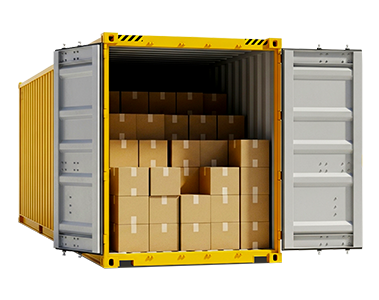
FCL Container Shipping from China
global supply chain
FCL containers for B2B
Timelines, Volume & Key Limitations of FCL Sea Shipping from China
What Is Included in the Cost of FCL Container Shipping from China
Which Container to Choose for FCL Sea Logistics from China?
Values are approximate and depend on the shipping line/manufacturer. Use for preliminary container type selection.
| Container Type | Code | Internal Length, m | Internal Width, m | Internal Height, m | Volume, m³ (CBM) | When Chosen | What to Check Before Booking |
|---|---|---|---|---|---|---|---|
| 20-foot Standard | 20DC | 5.898 | 2.352 | 2.393 | 33.2 | Basic option for small batches | Weight, payload, loading scheme |
| 20-foot High Cube | 20HC | 5.898 | 2.352 | 2.698 | 37.4 | When height and extra volume matter | Availability, ceiling height, door opening |
| 40-foot Standard | 40DC | 12.032 | 2.352 | 2.393 | 67.7 | Universal choice for large volume batches | CBM, pallets, loading uniformity |
| 40-foot High Cube | 40HC | 12.032 | 2.352 | 2.698 | 76.3 | More volume thanks to height | Package height, stacking, securing |
| 40-foot High Cube Wide | 40HCPW | 12.100 | 2.426 | 2.694 | 79.1 | When width and dense packing matter | Pallet width, door width, availability |
| 45-foot Container | 45DC | 13.556 | 2.352 | 2.393 | 76.2 | Maximum length at standard height | Availability, route, delivery restrictions |
| 45-foot High Cube | 45HC | 13.556 | 2.352 | 2.698 | 86.0 | For very large batches (max CBM) | Availability, feasibility, last mile conditions |
| 20-foot Refrigerated | 20RF | 5.444 | 2.290 | 2.276 | 28.3 | Temperature-sensitive cargo, smaller internal volume | Temperature, ventilation, power supply |
| 40-foot Refrigerated | 40RF | 11.583 | 2.290 | 2.250 | 59.6 | Temperature-sensitive cargo, large batches | Mode, airflow, packaging |
| 45-foot High Cube Refrigerated | 45HCRF | 13.102 | 2.294 | 2.509 | 75.4 | Temperature-sensitive cargo + large volume | Availability, mode, infrastructure |
Map of Sea FCL Logistics Routes from China
For LCL shipments from China, the basic route logic usually looks like this:
factory or supplier warehouse → container pickup → loading and sealing → port of departure → shipping line → port of arrival → import customs clearance → delivery to consignee’s warehouse.
Under standard conditions, part of the services along the Asia-Europe route go through the Suez Canal. However, amid increased risks around the Strait of Hormuz and wider instability in the Middle Eastern maritime corridor, logistics may be reconfigured: carriers change routes, introduce additional risk surcharges, or reroute vessels around the African continent via the Cape of Good Hope. This increases transit time and freight costs but reduces operational risks for certain services.
When FCL Is Profitable for Business
Sea delivery FCL from China is suitable when you have a large or stable batch that makes sense to ship in a dedicated container. This is the right option for regular B2B supplies where lower cost per volume, loading control, and fewer risks during transshipments matter.
- batches that nearly or fully fill the container;
- regular shipments with predictable volume;
- products requiring loading control and sealing;
- businesses seeking fewer transshipments and greater predictability.
When FCL Is Not Suitable
FCL is not a universal solution. If you have a small batch, a test purchase, or the cargo does not efficiently fill a container, full container shipping may be unprofitable. In such cases, it is better to separately compare FCL with LCL, Rail, or Air by transit time, volume, and total logistics cost.
- batches that do not economically fill a container;
- test or one-time small-volume shipments;
- urgent deliveries where maximum speed is critical;
- businesses unwilling to pay for unused container volume.
Which Goods Require Additional Control in FCL Logistics from China
FCL Container Shipping Workflow from China
Step-by-step process from inquiry to consolidated cargo delivery
What the Client Should Receive at the Start
To prevent FCL from becoming a “container in the dark,” it is crucial at the project start to fix not only the rate but also the route, payment terms, documents, control points, and who is responsible for each stage.
- project stage map and batch route;
- cost structure and payment logic;
- agreed document package and labeling requirements;
- loading control / QC / photo documentation plan;
- update rhythm and assigned project manager.
Why Businesses Choose Us
- Transparent Calculations: we calculate not only freight but the full landed cost.
- Evidence-Based Control: loading plan, photos, seals, documents, and status updates at each stage.
- No-Surprises Logic: key decisions and expenses are agreed upon before execution, not after.
- B2B Approach: we view the container as an element of the supply chain, not as an isolated one-off shipment.
- Global Mindset: we consider not only the exit from China but also the requirements of the destination market.
Related Cargo Delivery Methods from China
What if you don’t have all the data to fill out the form?
Don’t worry if you don’t have exact cargo specifications. Submit a consultation request, and our specialist will help refine the route and contact your factory to clarify all the details.
Calculate FCL Sea Freight Cost for Your Project
Answers to frequently asked questions about FCL shipping from China
What is FCL shipping from China?
When is FCL better than LCL?
Which containers are most commonly used?
What affects the price of FCL shipping?
How long does FCL sea shipping from China take?
What documents are needed for FCL?
Is container insurance necessary?
Is FCL suitable for equipment or non-standard cargo?
What happens if the route bypasses Africa?
What is needed for an accurate calculation?
Turnkey FCL Container Shipping from China for Global B2B Import
FCL container shipping from China is the optimal solution for businesses importing large or regular batches of goods and wanting to transport cargo in a dedicated container. The FCL (Full Container Load) format means the container is reserved for one client, providing more control over loading, routing, documentation, and lead times.
For B2B companies, FCL sea delivery from China is a tool for reducing logistical unit costs on volume, increasing supply predictability, and controlling risks. Easy China Business organizes turnkey FCL shipping from China, considering the route, container type, restrictions, and real supply economics.
When FCL Shipping is Profitable for Business
FCL sea shipping from China is chosen when the cargo volume is already sufficient for a dedicated container, and the business prioritizes control, stability, and lower logistical costs per batch.
- Large batches — efficient container utilization.
- Regular supplies — a predictable format for B2B imports.
- Fewer transshipments — lower risk of cargo damage.
- More control — loading, sealing, documentation, and routing.
In many projects, FCL is used as the baseline format for regular imports: trial batches may go via LCL, urgent ones via air, and large commercial supplies via full container from China.
What Turnkey FCL Shipping Includes
When ordering FCL sea shipping from China, the client receives more than just a container; they get full organization of the logistical process.
- Cargo analysis: volume, weight, packaging, restrictions.
- Container selection: 20GP, 40GP, 40HQ, or specialized formats.
- Optimal sea route selection.
- FCL shipping cost calculation from China.
- Verification of restrictions and product requirements.
- Preparation of shipping documentation.
- Loading, securing, and sealing supervision.
- Container movement monitoring and status updates by stage.
For business, this means a predictable process, a clear cost structure, and more control over the supply.
What Affects the Cost of FCL Shipping
The query "FCL shipping price from China" is one of the most common, but container shipping costs are not determined by the freight rate alone.
- Container type: 20GP, 40GP, 40HQ, or specialized containers.
- Route, departure port, and number of transshipments.
- Product type and category.
- Seasonality and shipping line capacity.
- Port fees and local charges.
- Customs clearance and delivery to the warehouse.
We calculate several delivery scenarios: cheaper, faster, or balanced. This makes FCL logistics from China a predictable part of your business.
Routes and Risks of Sea Shipping
Container shipping from China depends on global maritime corridors, service availability, transshipment ports, and shipping line schedules.
During periods of instability, carriers may change routes, services, or lead times. This affects transit time, delivery costs, and supply chain stability. For business, it is important to consider not only the base rate but also the risks: delays, congestion, port overcrowding, service changes, and additional surcharges along the route.
Which Cargoes are Suitable for FCL
FCL sea delivery is suitable for a wide range of goods: equipment, furniture, components, raw materials, packaged B2B batches, goods for distribution, and regular imports. Batteries, liquids, hazardous goods, temperature-sensitive items, fragile products, and categories with special transportation requirements require separate verification.
Why Business Chooses ECB
- Transparent Mathematics. Real FCL shipping costs from China without hidden surcharges.
- Task-Oriented Route. We select the container and logistics based on deadlines and budget.
- Process Control. We verify documents, stages, and shipping logic.
- B2B Approach. You understand not just the price, but the entire supply model.
How to Get an FCL Shipping Calculation
For a calculation, please send: product, weight, volume, dimensions, photo, city of departure, and destination country. We will prepare the optimal FCL container shipping option from China for your business.