















Remote Visits to Exhibitions, Factories, and Markets
Wholesale Supply from China
Worldwide  for B2B customers
We turn sourcing, OEM/ODM manufacturing, quality inspections, and shipping from China into one controlled process.
We calculate unit economics before you commit, fix terms in a contract, control supplier payments, and verify quality at every critical stage
FOR MARKETPLACE SELLERS
WHOLESALE IMPORTERS
PROCUREMENT TEAMS
BRANDS & PRIVATE LABEL
OEM/ODM PROJECTS
MANUFACTURERS
RETAIL CHAINS
NEW PRODUCT LAUNCHES
CORPORATE PROCUREMENT
QC-CONTROLLED PROJECTS
👌 easy with Easy China Business:
How to find
How to purchase
How to manufacture
How to brand
How to ship
wholesale products from China?
We don’t sell “cheap China.” We create a controlled process: requirements, manufacturer in China, price, contract, payment, QC inspections, packaging and labeling, turnkey product logistics.
Where to Start Working with China
Not every project requires a full cycle right away. Sometimes it’s enough to validate the niche, sometimes to buy out the first batch, and sometimes to immediately launch OEM/ODM manufacturing or regular supplies from China.
Let’s Get Acquainted
| It all started | Headquarters | Company Staff |
| in 2011 with 10 digital watches | in Guangzhou, China | 25+ multinational team of specialists |
Easy China Business
China under control: risk, process, results
15+ years
Cost-quality optimized
Speed & reliability
Easy China Business - Guangzhou-based team for B2B sourcing & manufacturing
About Us
в 2011 году с 10-ти
электронных часов
электронных часов
Все началось

Let’s Get Acquainted
| Company Staff |
| 25+ multinational team of experts |
| It all started | Headquarters |
| in 2011 with 10 electronic watches | in Guangzhou, China |
Easy China Business
Risk control, not promises
15+ years
Cost-quality optimized
Speed & reliability
Easy China Business - Guangzhou-based team for B2B sourcing & manufacturing
About Us
Services for your business in China
How We Can Help You
Additional Company Services
Which you can use when working with our company or delegate their execution to us

Ordering, Inspection, and Delivery of Product Samples

Consolidation and Storage of Goods in China
Secure Payment Processing in China
Project Scoring before launch - landed cost per unit + risk review
We review your sourcing/manufacturing plan and build a structured report with verified supplier options and logistics scenarios - so you can approve a project only if the economics and risks make sense.
You’ll receive:
- Unit price + availability / production lead time
- MOQ for purchasing or manufacturing
- Packaging data for MOQ (weight, volume, density)
- Logistics cost scenarios (optimal route)
- Landed cost per unit in your country, including all planned import costs
What the report looks like and what you will receive?
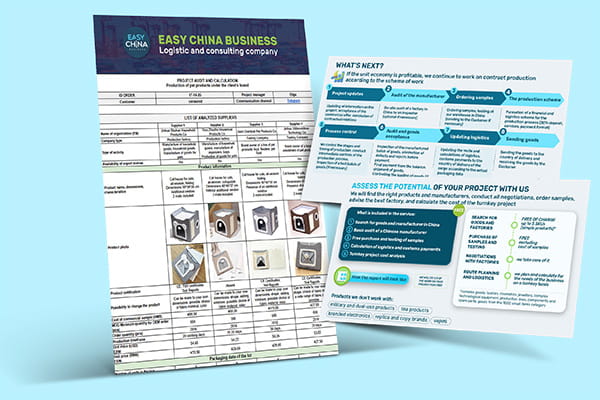
You’ll get a Project Scoring that calculates your true landed cost per unit (including all import expenses) so you can validate margins and launch only if the project is profitable
Projects we’ve delivered (results, not promises)
Auto Parts
Factory sourcing, business support in China, and procurement of auto parts from China
Client’s Goal: to organize business support for major factories manufacturing diesel engine fuel injectors. Sample procurement of injectors from brands Denso, Bosch, Delphi.
Purchase of injector samples from brands Denso, Bosch, Delphi.
Purchase of injector samples from brands Denso, Bosch, Delphi.
Our services and results:
Video Case: Sourcing Auto Injector Manufacturers in China
Children’s Products
Wholesale supply of children’s products for marketplaces
Client’s Goal: to organize regular procurement of a wide range of children’s products from various factories in China, including consolidation, quality inspection, and container loading.
Our services and results:
Video Case: Outsourcing the Supply Chain of Children’s Products from China
Pet Products
Wholesale supply of pet products for marketplaces
Clients’ Goal: to organize business support in China for factories and wholesale markets of pet products, purchase product samples, and establish partnerships with factory management to enable regular branded product procurement.
Our services and results:
Video Case: Sourcing Pet Product Manufacturers in China
Confectionery Equipment
Manufacturing of confectionery equipment
Client’s Goal: to organize business support in China to visit a factory producing production lines for confectionery products. Subsequently, to arrange production of the line according to technical specifications and capacities tailored to client needs, conduct inspection, loading, and delivery.
Our services and results:
Video Case: Manufacturing of Confectionery Equipment in China
Biodegradable Diapers
Business support for diaper manufacturing factories
Clients’ Goal: to organize business support in China with visits to major factories producing biodegradable and conventional diapers. Also planned was attending the Canton Fair to source manufacturers across different product categories.
Our services and results:
Video Case: Sourcing Diaper Manufacturers in China
Free Logistics Calculation
and Project Scoring
and Project Scoring
Transparent Pricing Policy
for Our Services and Logistics
for Our Services and Logistics
Resolving Disputes
with Chinese Factories
with Chinese Factories
Offering Various Payment
Methods to Chinese Counterparties
Methods to Chinese Counterparties
Warehouse Product Inspection
and Secure Packaging
and Secure Packaging
Closing Documents
for the Goods
for the Goods

Continuous Support
from Our Specialists
from Our Specialists
Why Choose Us and Partner with Us

Ongoing Support from Our Specialists
Transparent Pricing Policy
Warehouse Product Inspection
and Secure Packaging
and Secure Packaging
Closing Documents
for Goods
for Goods
Multiple Payment Methods Provided
Dispute Resolution with Chinese Factories
Logistics Calculation and Project Scoring Before Launch
Why Clients Choose and Collaborate with Us
Our Advantages
Why partnering with Easy China Business is profitable and reliable
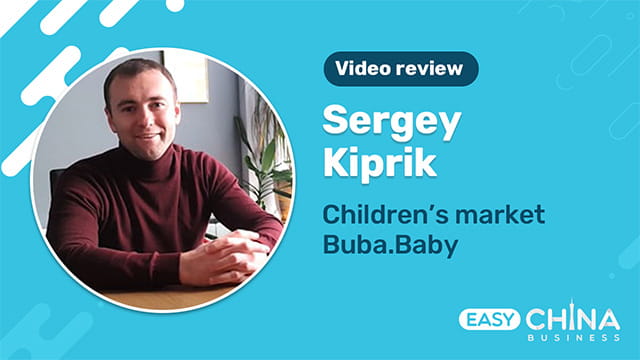
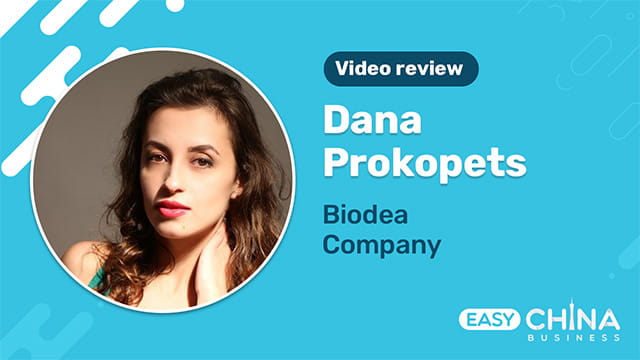
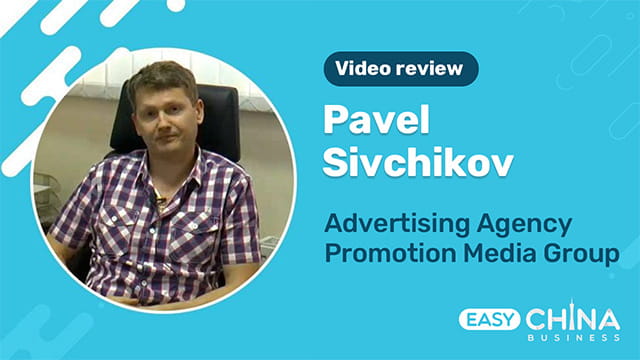
Let’s Listen to Video Testimonials
What those already working with us say

Our Partners:
We negotiate special terms and commission rates from our partners on behalf of our clients










Answers to Frequently Asked Questions:
Where to start if I want purchasing or manufacturing in China?
What are the main services of Easy China Business?
How do you find a supplier or factory for my product?
Do you provide business trip support to China and factory negotiations?
What is the difference between OEM and ODM, and how do you manage manufacturing?
How does product buyout and payments in China work to reduce risks?
When are export agent services in China needed?
What delivery options from China are available?
What does factory audit and quality control (QC) inspection include?
Can you manage a turnkey project as a remote purchasing department in China?
Consulting Services in China of Any Complexity by Easy China Business
Product and Manufacturer Sourcing in China: How to Buy Wholesale and Launch Production Without Surprises
Wholesale goods from China are no longer just about "finding it cheaper and ordering." In B2B, the real cost of a mistake is measured not only in money but also in timelines, reputation, and lost sales.
Most problems appear not at the "supplier search in China" stage, but later: when it turns out that the MOQ is not suitable, the specification is interpreted differently, the batch quality differs from the sample, and extra fees pop up after the deposit is paid.
Therefore, the right approach is to build the process as a system: requirements → economics → fixing conditions → quality control → logistics and customs. This is how wholesale purchases and production in China become manageable.
Who Benefits from Manufacturer Sourcing and Wholesale Purchases in China
This model is especially useful if you are:
- A marketplace seller prioritizing consistent quality, stable lead times, and packaging/labeling compliant with platform requirements.
- A wholesale importer or distributor needing regular supplies, volume, predictable landed costs, and clear terms.
- A brand or Private Label planning to stand out from competitors and manage product features, packaging, and quality.
- A procurement department where documentation, regulations, control points, and transparent reporting at every stage are critical.
- An OEM/ODM project where the product needs to be manufactured according to specific technical requirements.
Where the Work Begins: Brief and Technical Specifications (TS)
The first step is not "writing to factories" but gathering input data. The more accurate the brief, the faster you will receive relevant offers and the lower the risk of "the wrong result."
A basic brief usually includes:
- SKU and Specification: materials, dimensions, critical tolerances, quality, and aesthetic requirements.
- Packaging and Labeling: box types, inserts, barcodes, languages, sticker, and logo requirements.
- Procurement Plan: initial batch size, quarterly/seasonal plan, repeatability, and seasonality.
- Delivery Terms (Incoterms): EXW / FOB / CIF / DDP — to correctly calculate landed costs.
- References: links, photos/videos, examples of analogs, and "how it should look."
- QC Focus: what must be checked in samples and before shipment.
Without this data, the project often starts "in the dark," leading to issues with price, timelines, and quality later on.
Free Product Sourcing and Economic Calculation: Why It Is More Important Than the "Factory Price"
When people mention "Alibaba / 1688 prices," it is almost never the final landed cost. The final figure for a business is the cost "to your warehouse," which depends on:
- MOQ and packaging,
- defects/repacking,
- logistics and delivery type,
- documentation and customs duties,
- exchange rates and payment schemes.
Therefore, before launching a project, it is vital to perform a review: obtain 2–3 economic scenarios to understand what is more profitable—increasing the batch, changing the packaging, choosing another Incoterm, adjusting product requirements, or rescheduling the start.
Manufacturer Sourcing in China: How to Find the Real Producer
Finding a manufacturer is more than just catalogs and emails. The goal is to exclude "trading companies" where a factory is needed and confirm that the supplier has the capacity and experience for your specific product type.
A combination of methods is usually used:
- An internal database of verified factories and collaboration history,
- Industry catalogs and platforms,
- Exhibitions and professional events,
- Verifying "production traces" (videos/photos of lines, workshops, warehouses),
- Requesting export history/case studies,
- Confirming capabilities according to your Technical Specifications.
The result of the search is not a "contact list," but a set of comparable commercial offers under your volume and timelines, with clear logic.
Manufacturing in China: OEM vs. ODM — Which to Choose
- OEM Manufacturing — The factory produces a product based on an existing model; you add branding (logo, packaging, labeling) and sometimes minor changes.
- ODM Manufacturing — The product is refined or developed according to your specification: materials, construction, functionality, and unique packaging.
In both cases, it is critical to approve samples, fix specifications, and agree on how quality will be controlled during mass production.
Quality Inspection in China (QC): Setting the Criteria
Quality Control (QC) is the primary safety mechanism. It works when the following are defined in advance:
- What exactly we check (critical parameters),
- Where we check (samples / in-process / pre-shipment),
- Which method we use for documentation (checklists, photos/videos, measurements),
- Actions taken for deviations (reworking, replacement, repacking, withholding payment).
Logistics from China and Customs Clearance: An Essential Project Component
Even the perfect factory won't save a project if logistics are chosen incorrectly. Freight shipping from China must be calculated alongside the economics:
- Routes and Incoterms chosen for business goals,
- Documentation prepared in advance,
- Packaging and labeling requirements accounted for,
- A clear warehouse receiving plan (checklist).
Step-by-Step Process: From Brief to Delivery
- Gathering input data and the brief.
- Revision of quotes and risks: 2–3 unit-economy scenarios.
- Manufacturer search and initial relevance check.
- Negotiations and comparison of offers.
- Fixing conditions in documents before payment.
- Sampling and approval of the "golden sample."
- Production monitoring at control points.
- QC/Inspection + action plan for defects.
- Shipment, logistics, and customs.
- Warehouse receiving according to the checklist.
The Final Result for Your Business:
- Predictability: Clear stages and control points.
- Quality Control: Hard criteria and evidence instead of "it looks okay."
- Managed Landed Cost: Economic calculation before the start.
If you need to find a product in China directly from the manufacturer or launch production under your brand—start with requirements and economics. This is the shortest path to a supply without surprises.